



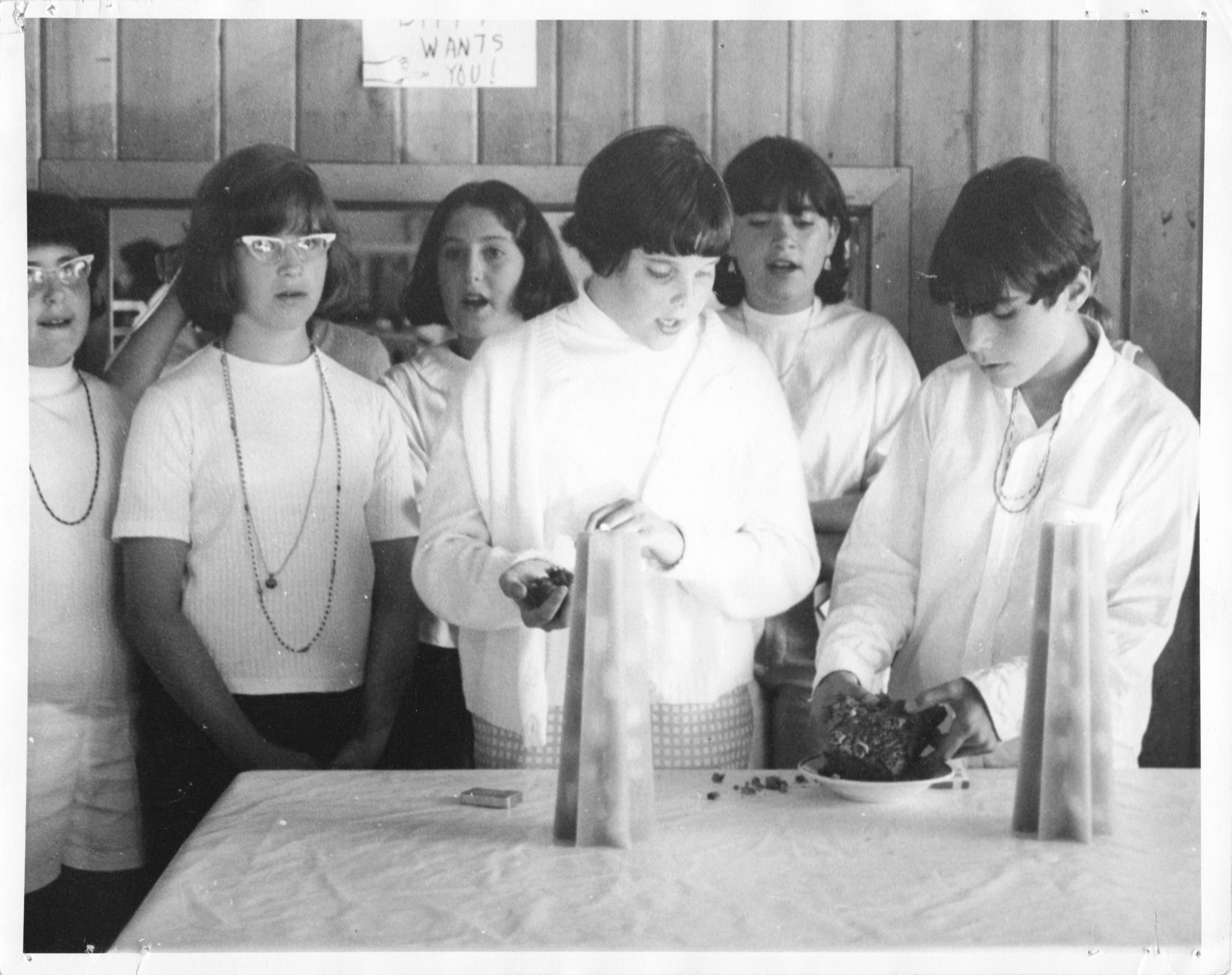

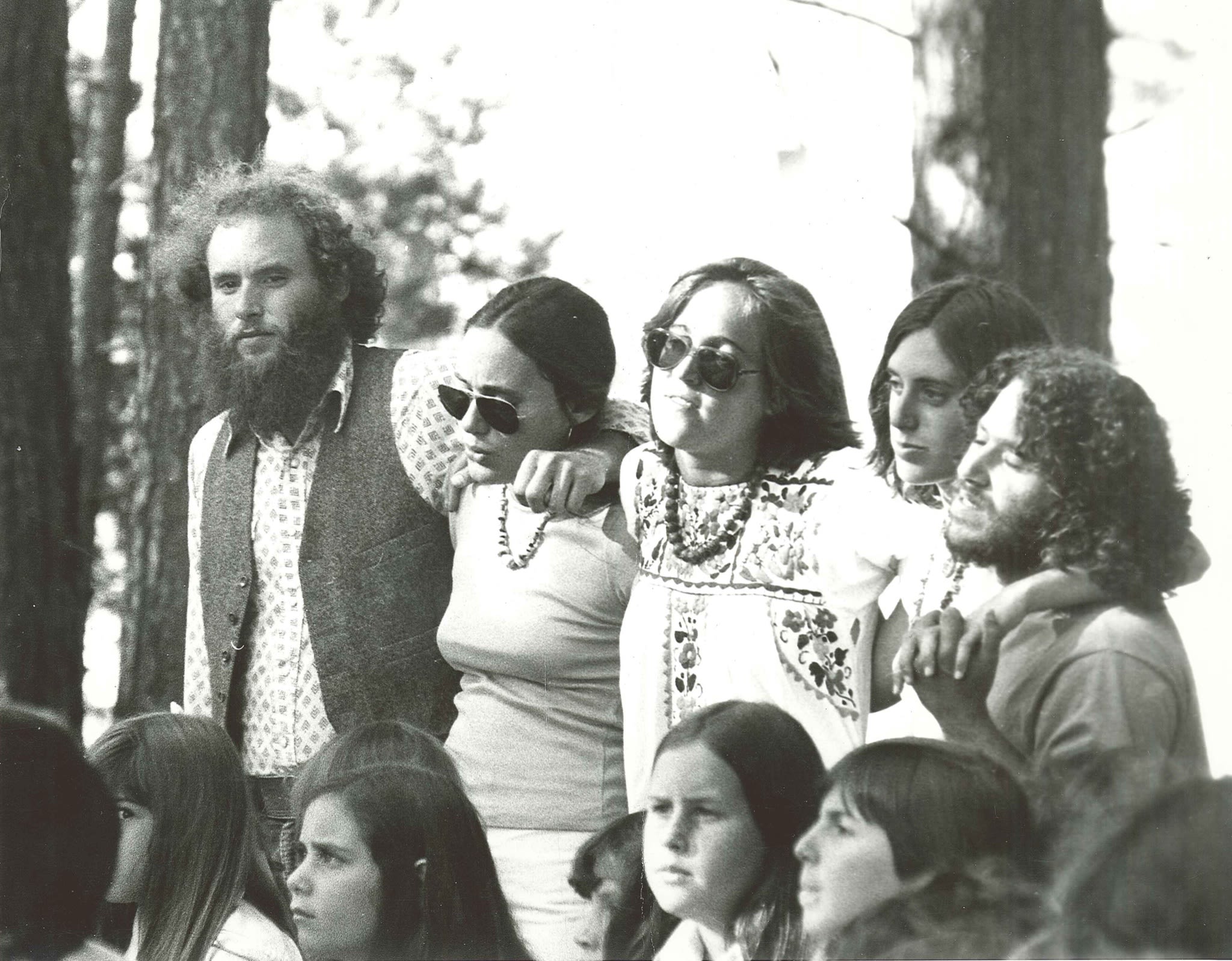
Camp in the 60s was just one of the most wonderful, magical places to be.

Chapter Three
New Beginnings
Tawonga in the 1960s


Tawonga Reopens
When Camp Tawonga reopened in 1965, very little about its future was settled. The camp had last operated in 1943, when the pressures of World War II forced its closure, and for more than two decades afterward, its revival remained uncertain.
During that hiatus, a Camp Tawonga committee within the Jewish Community Center met periodically to consider reopening camp, while a dedicated group of alumni — affectionately calling themselves “old-timers” — held reunions, raised funds, and kept the idea alive without knowing whether it would ever fully return.
That uncertainty ended when the United Jewish Community Centers (of San Francisco, Marin, and the Peninsula) purchased a former summer camp run by the Columbia Park Boys’ Club, making it possible to reopen Camp Tawonga in the Sierra Nevada foothills.
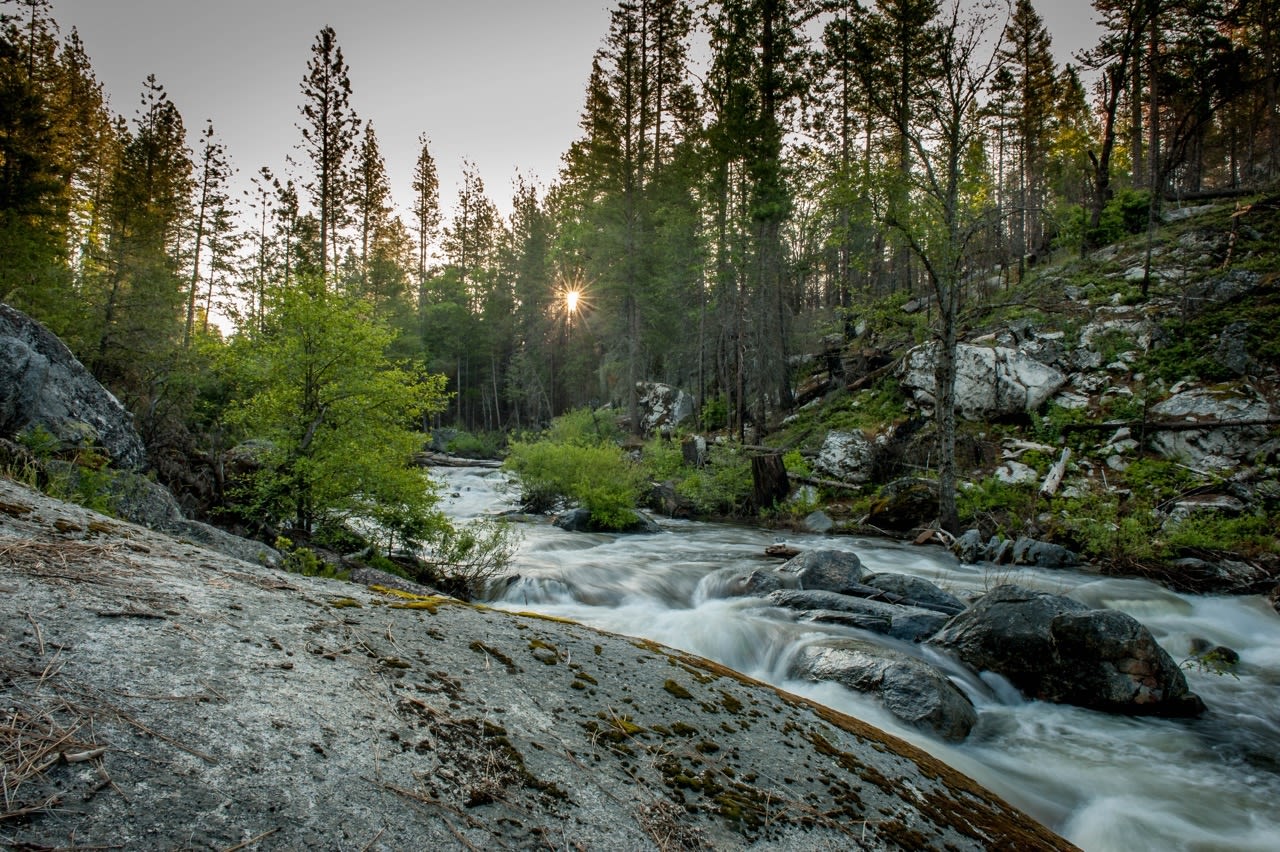
In the summer of 1965, the camp once again brought young Jewish people from the San Francisco Bay Area to a remote setting defined by fresh air, tall trees, and bright stars in the dark sky.
What remains striking, in retrospect, is how provisional those early years were. The surviving records from the 1960s — a small collection of newspaper articles, brochures, photographs, and board documents — suggest a camp still in the process of defining itself. Tawonga was operating, growing, and attracting campers, but it was still developing its identity.


Tawonga reopened under the directorship of Harry Altschule, who ran the camp for its first two seasons before leaving to lead the Jewish Community Center in Salt Lake City. No photograph of him from that time survives.
The letter below, from Altschule to the board in spring 1965, invites them to an “Open House” on the property several months before camp opened to campers that summer.

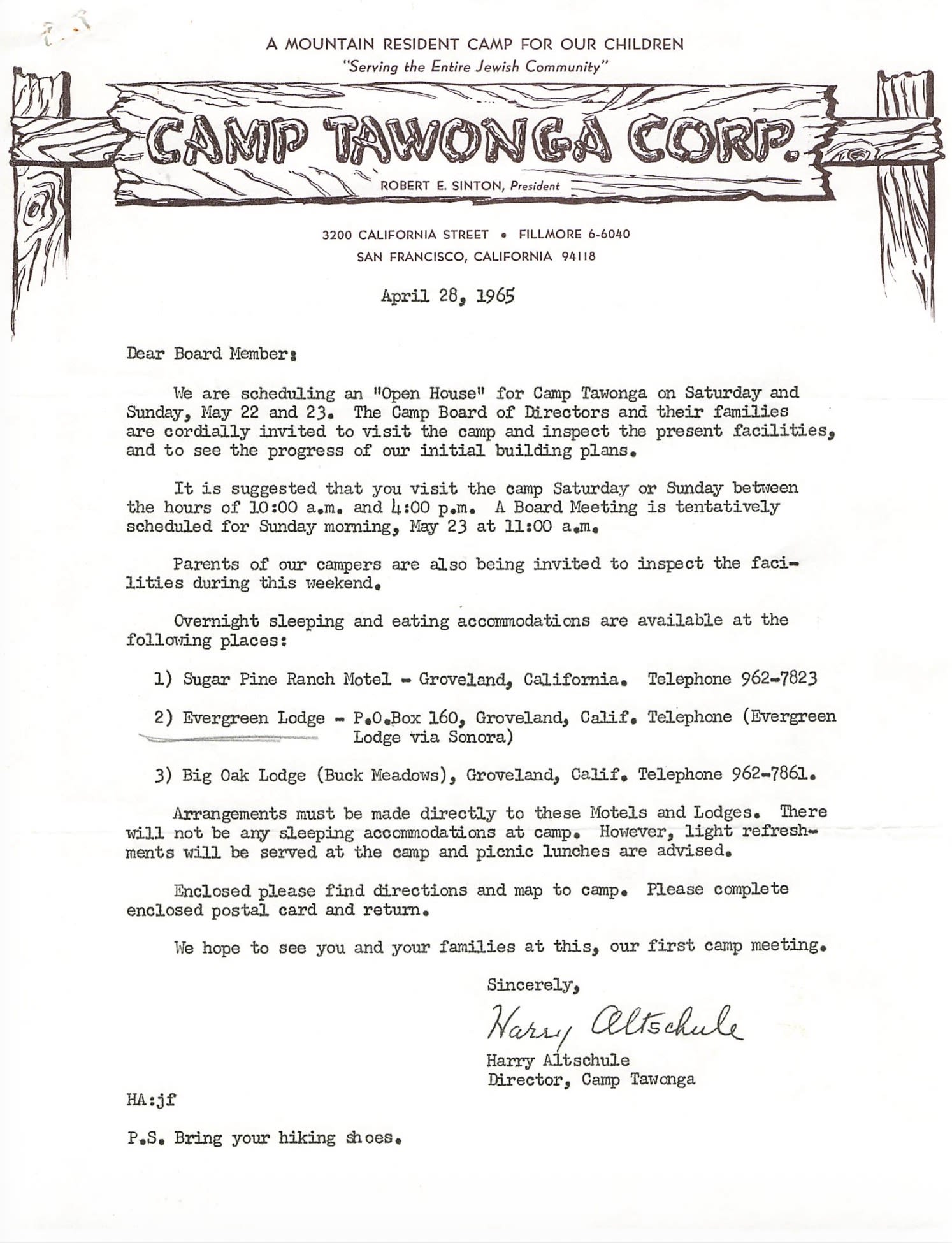
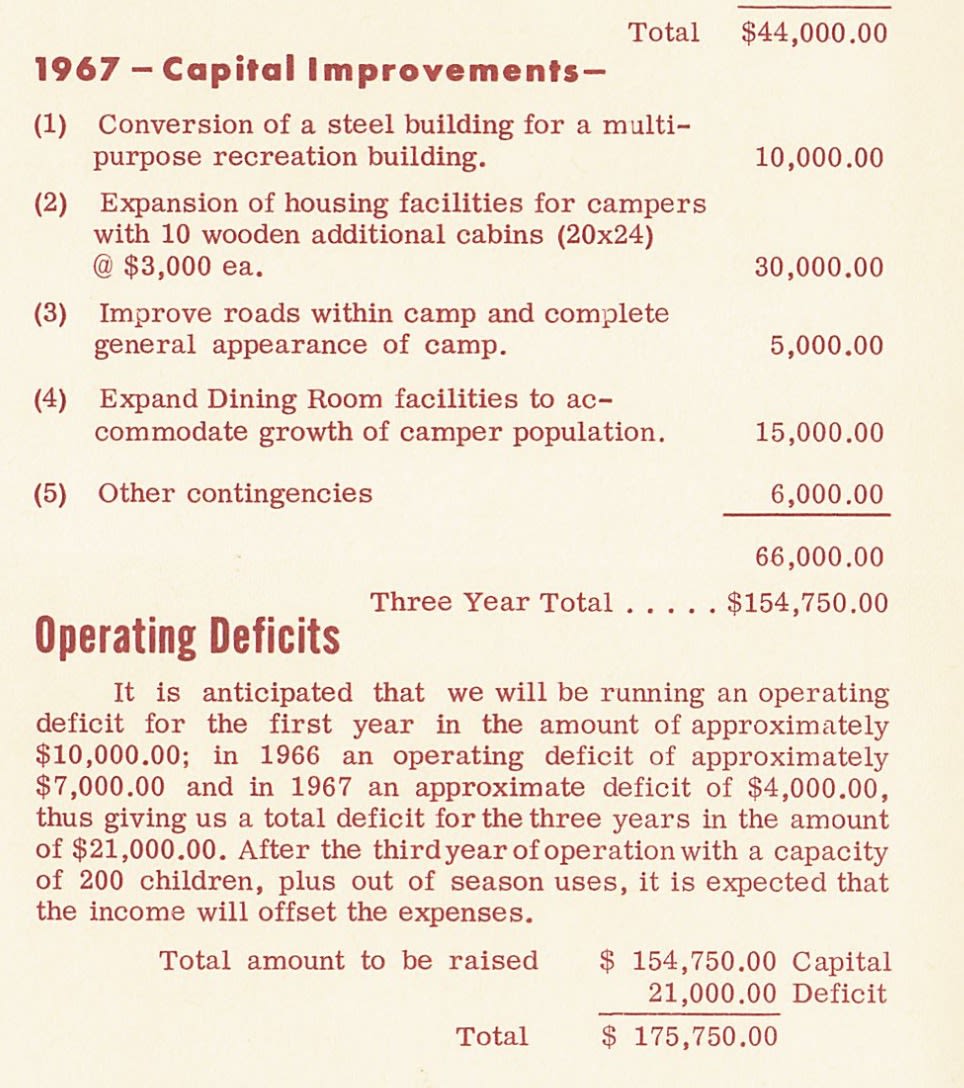
The invitation offered board members a preview, but it also revealed how much work remained. A 1965 report to the United Jewish Community Centers detailed the infrastructure challenges the new camp faced: septic systems, water lines, tent bunks “in bad disrepair,” and a dining hall that would need expansion to accommodate growth.
The three-year capital plan totaled $154,750 — the equivalent of more than $1.5 million today. The board projected operating deficits for each of the first three years and confirmed that a group of community leaders had personally guaranteed the mortgage.

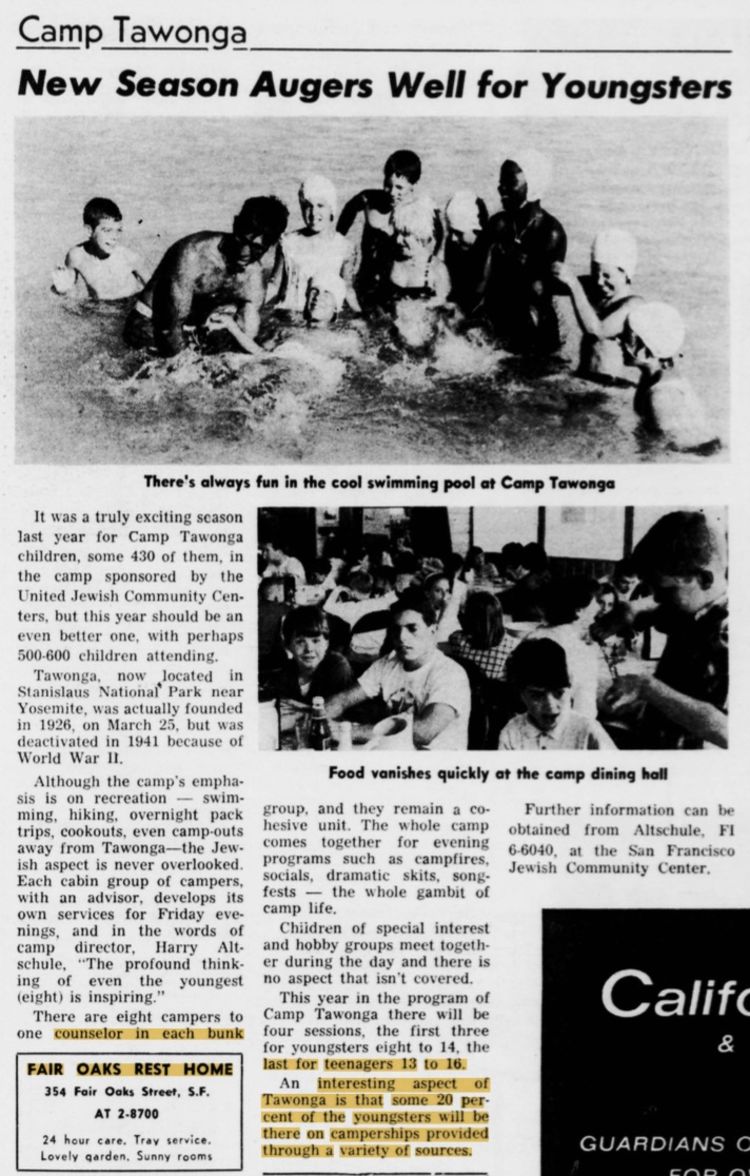
Camp opened on schedule that summer. And from the beginning, Tawonga was committed to making itself accessible regardless of a family’s ability to pay — a principle carried forward from its earliest years in the 1920s and 1930s.
A 1966 article in the Jewish Community Bulletin noted that 20 percent of campers attended on camperships, financial assistance provided through community support. Six decades later, that commitment endures.


With the doors finally reopened, Tawonga needed campers — and that meant promotion.
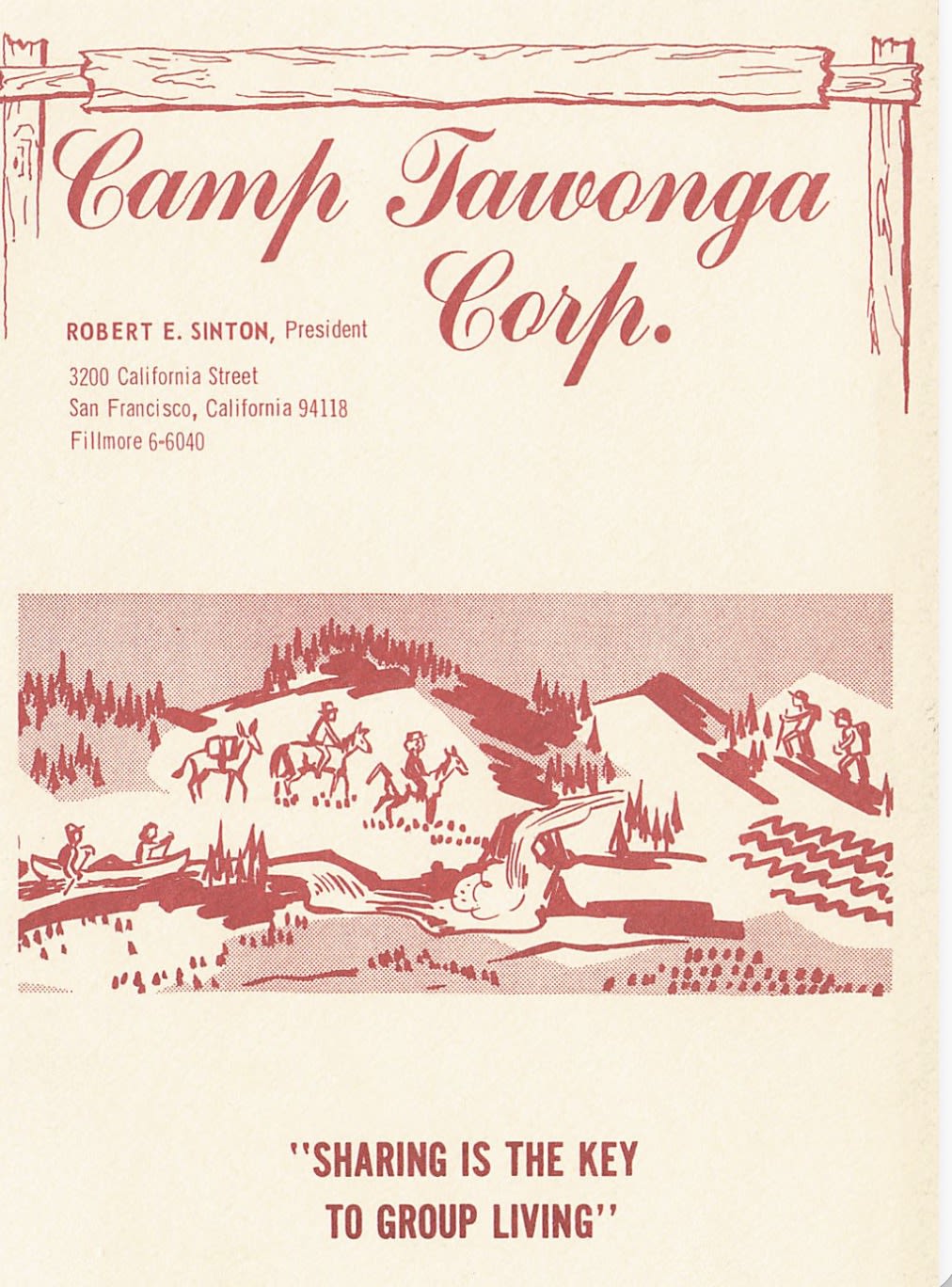
The camp that reopened in 1965 announced itself to the Bay Area Jewish community through a brochure that now feels like an artifact from another era. Its illustrations — cheerful line drawings characteristic of the postwar decades — suggested a wholesome, all-American summer experience.

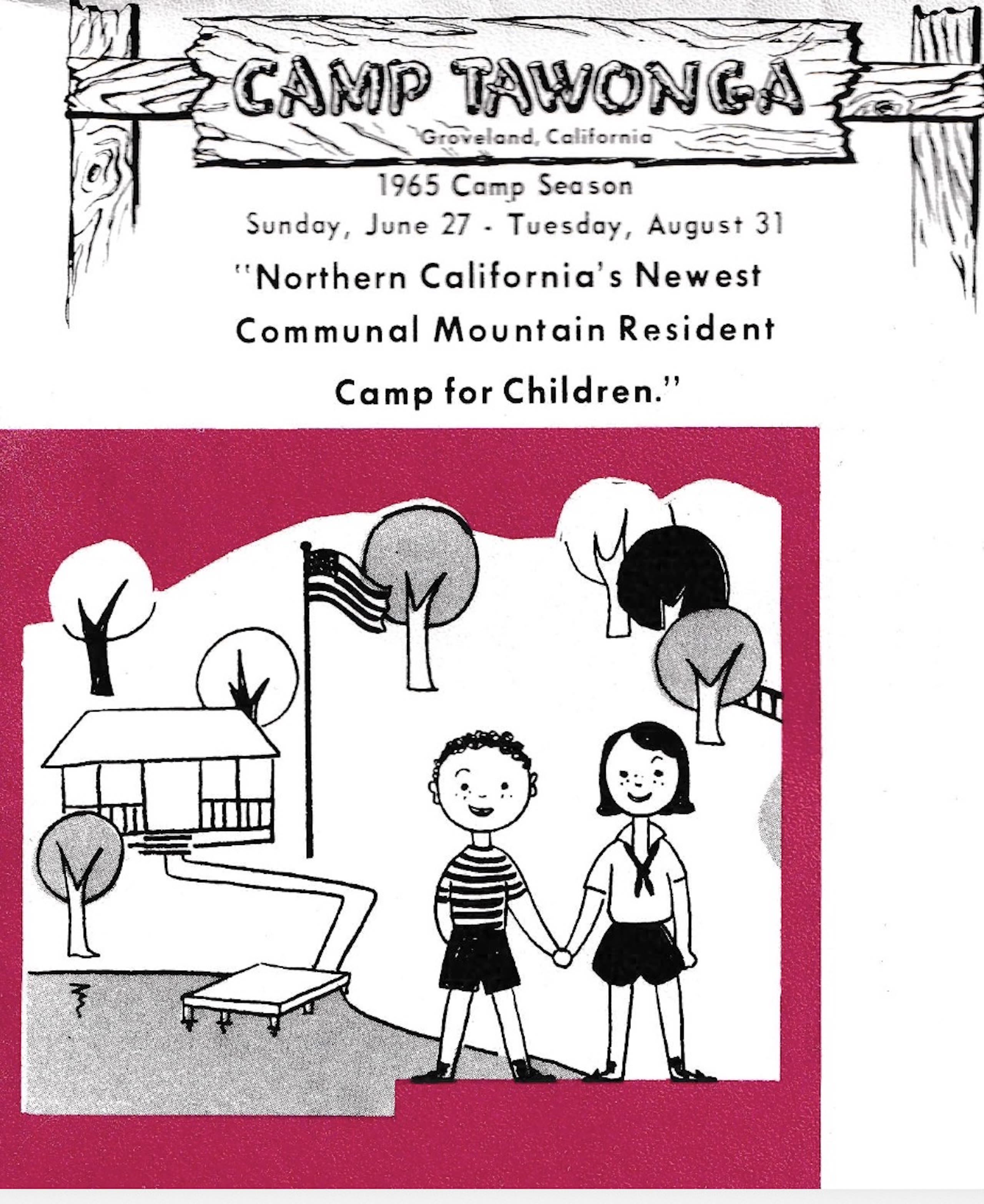
Note that the cover of the brochure doesn’t mention that Tawonga is a Jewish camp.
Note that the cover of the brochure doesn’t mention that Tawonga is a Jewish camp.
The language was general, almost generic: swimming, horseback riding, crafts, nature. There was no indication yet of what would make Tawonga distinctive. It was a basic summer camp trying to be a summer camp.
The following are select pages from the brochure of 1965:

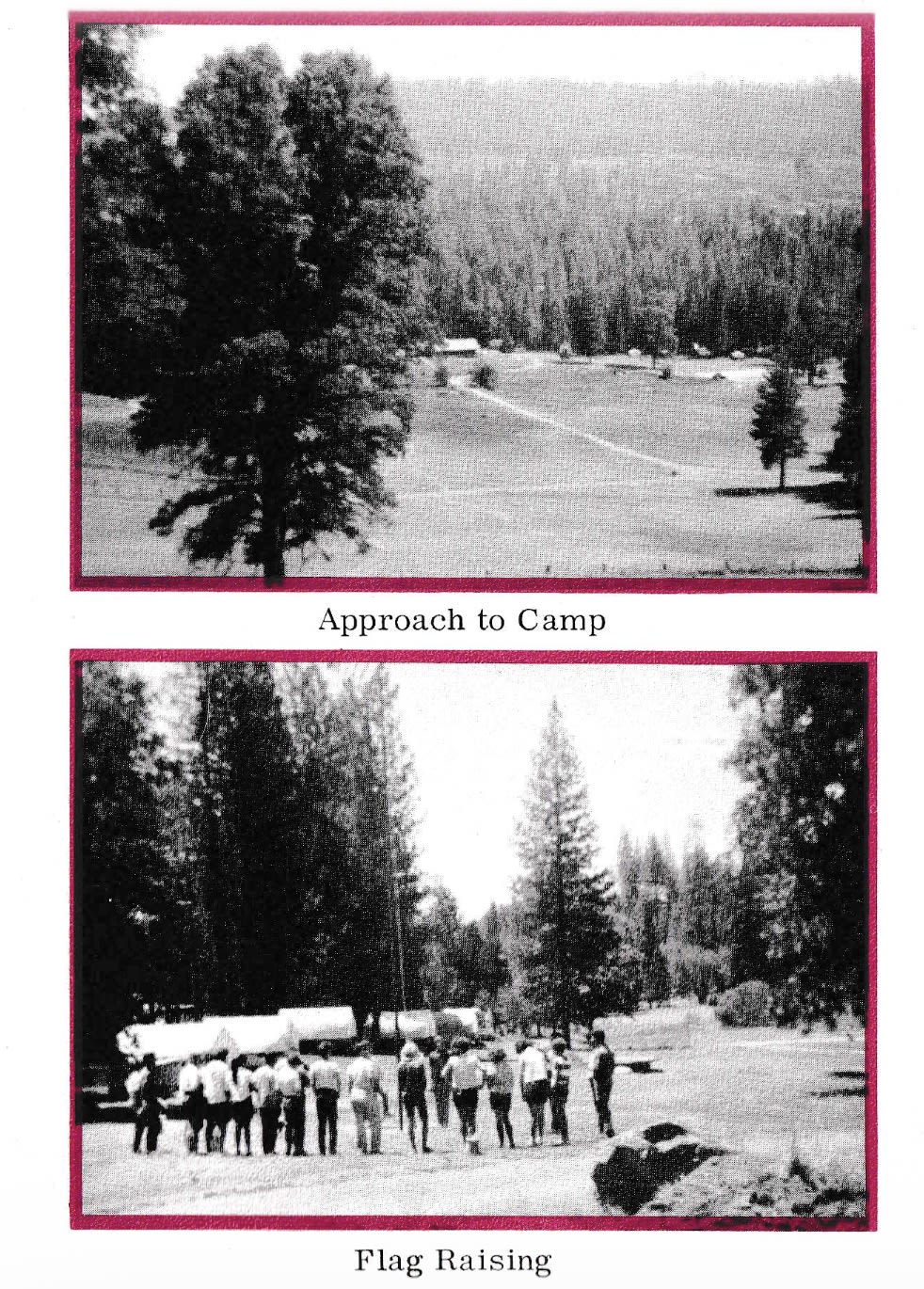

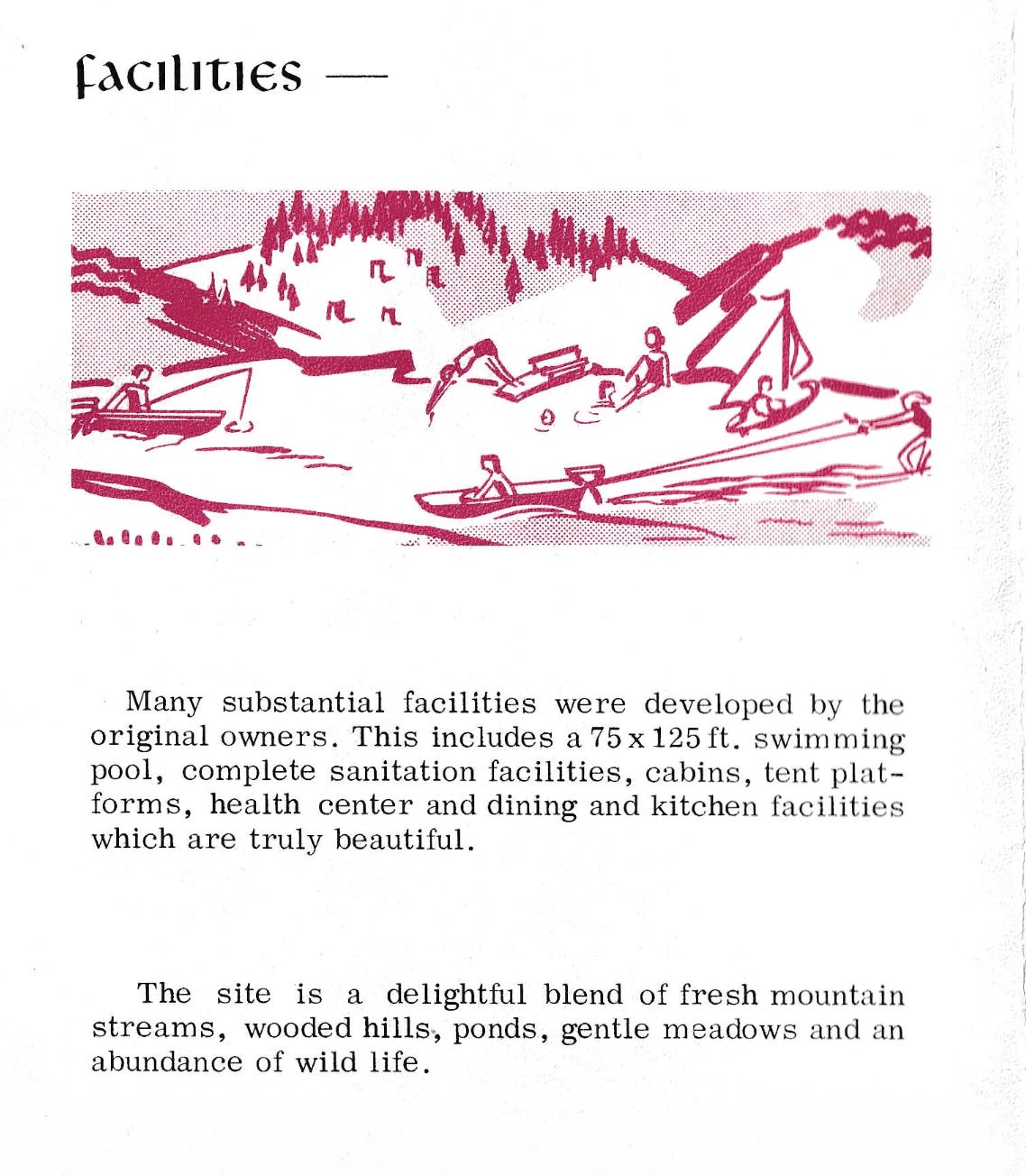

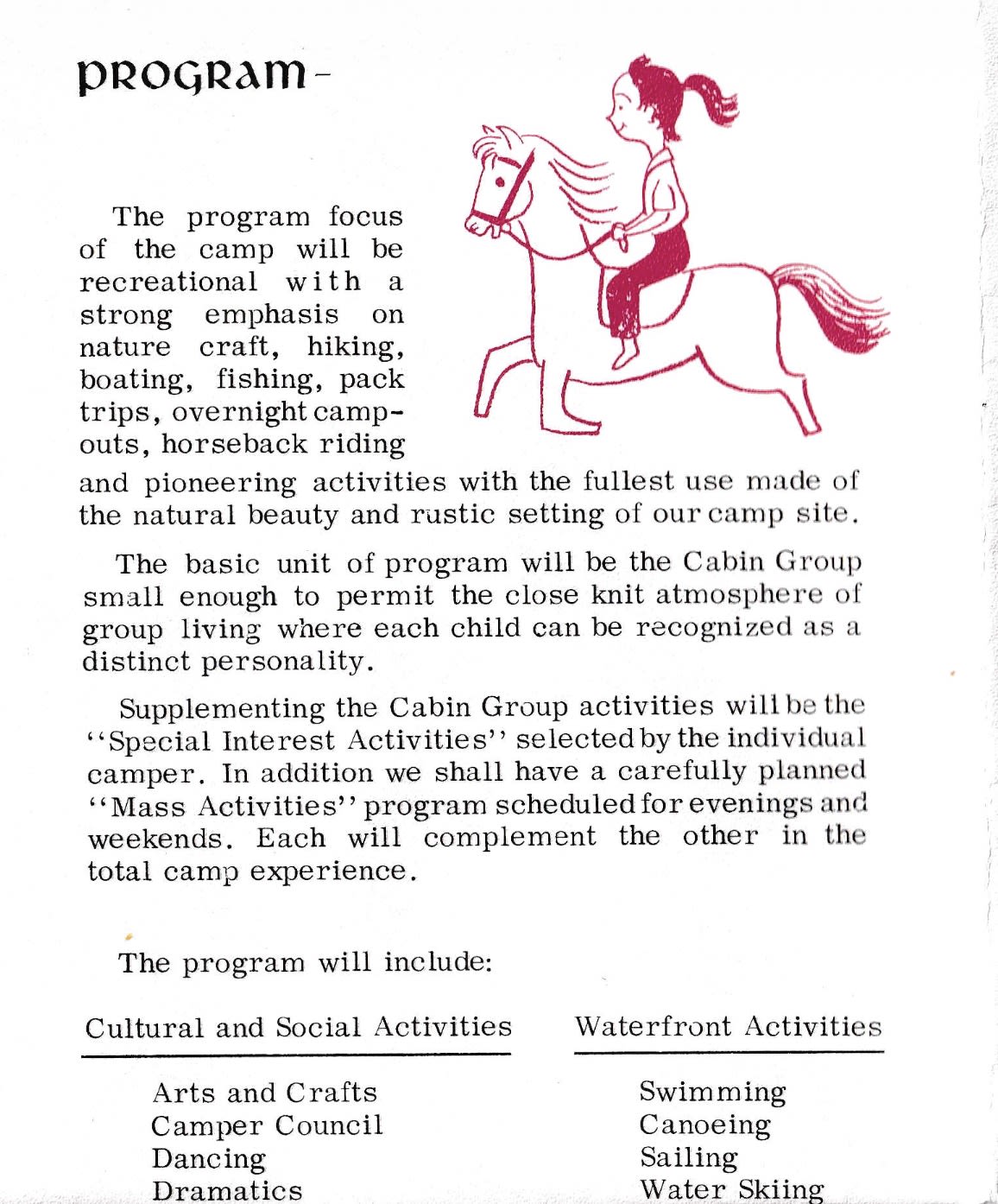
Horseback riding? Yes, at various times throughout the 1960s and 1970s, Tawonga contracted with nearby Camp Mather to offer horseback riding for campers.
Horseback riding? Yes, at various times throughout the 1960s and 1970s, Tawonga contracted with nearby Camp Mather to offer horseback riding for campers.

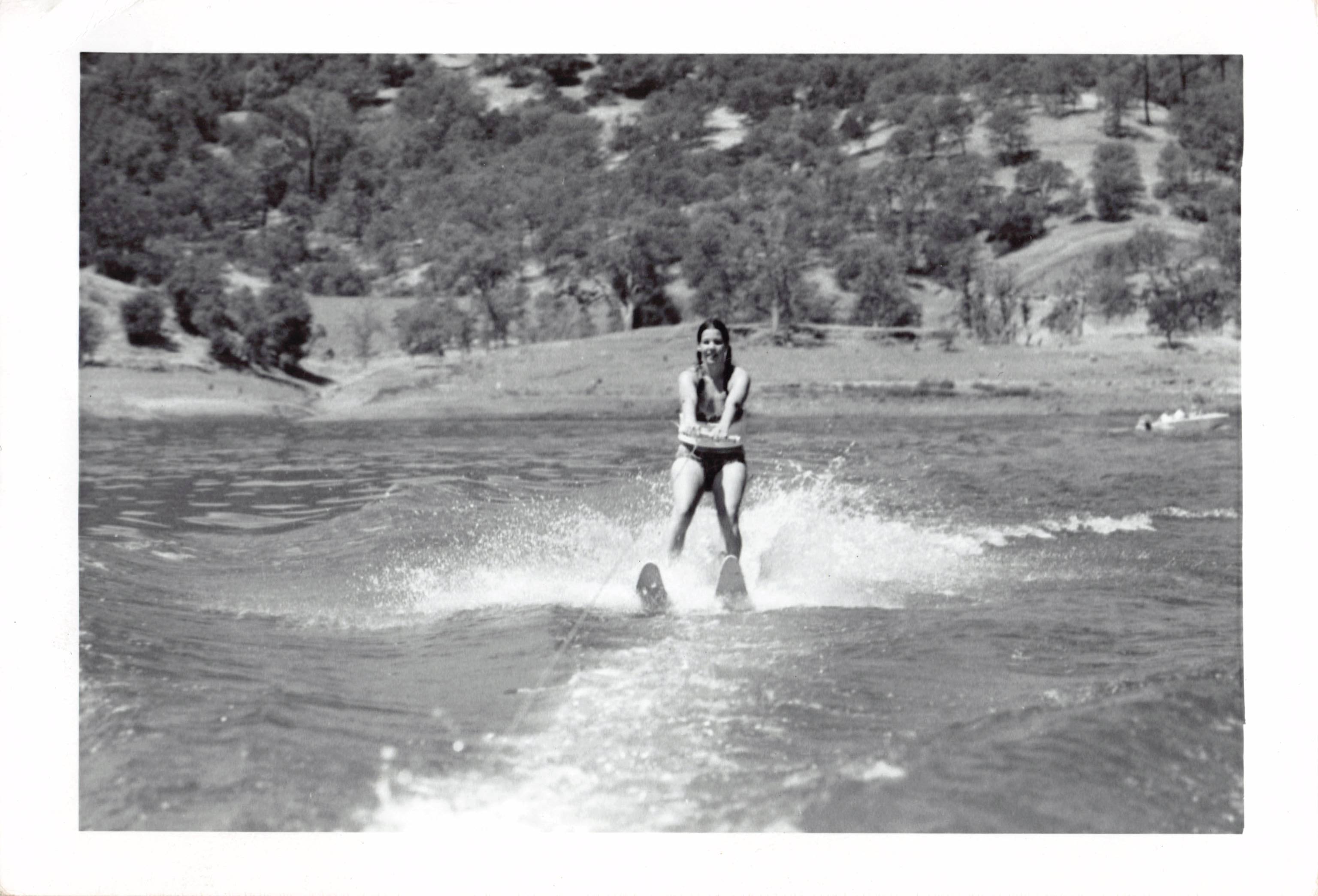
The water skiing — a program that didn’t last long — took place on Don Pedro Reservoir.
The water skiing — a program that didn’t last long — took place on Don Pedro Reservoir.
One page of the brochure highlights “Jewish Living” as part of the program’s goals.


By 1966, with one summer behind them, Tawonga published a new brochure featuring photographs from camp.

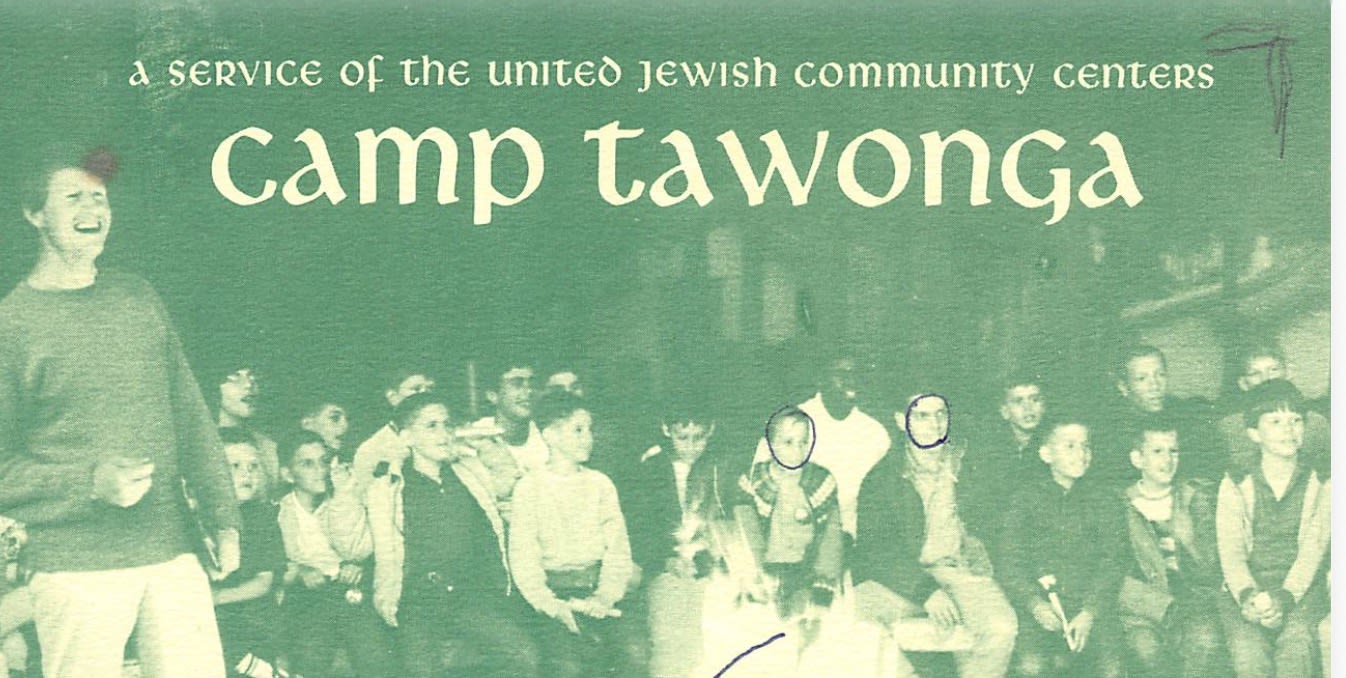
It described Tawonga on the cover as “A Service of the United Jewish Community Centers” and included a section on “Jewish Living” — emphasizing Jewish music, dance, and folklore on the Sabbath.

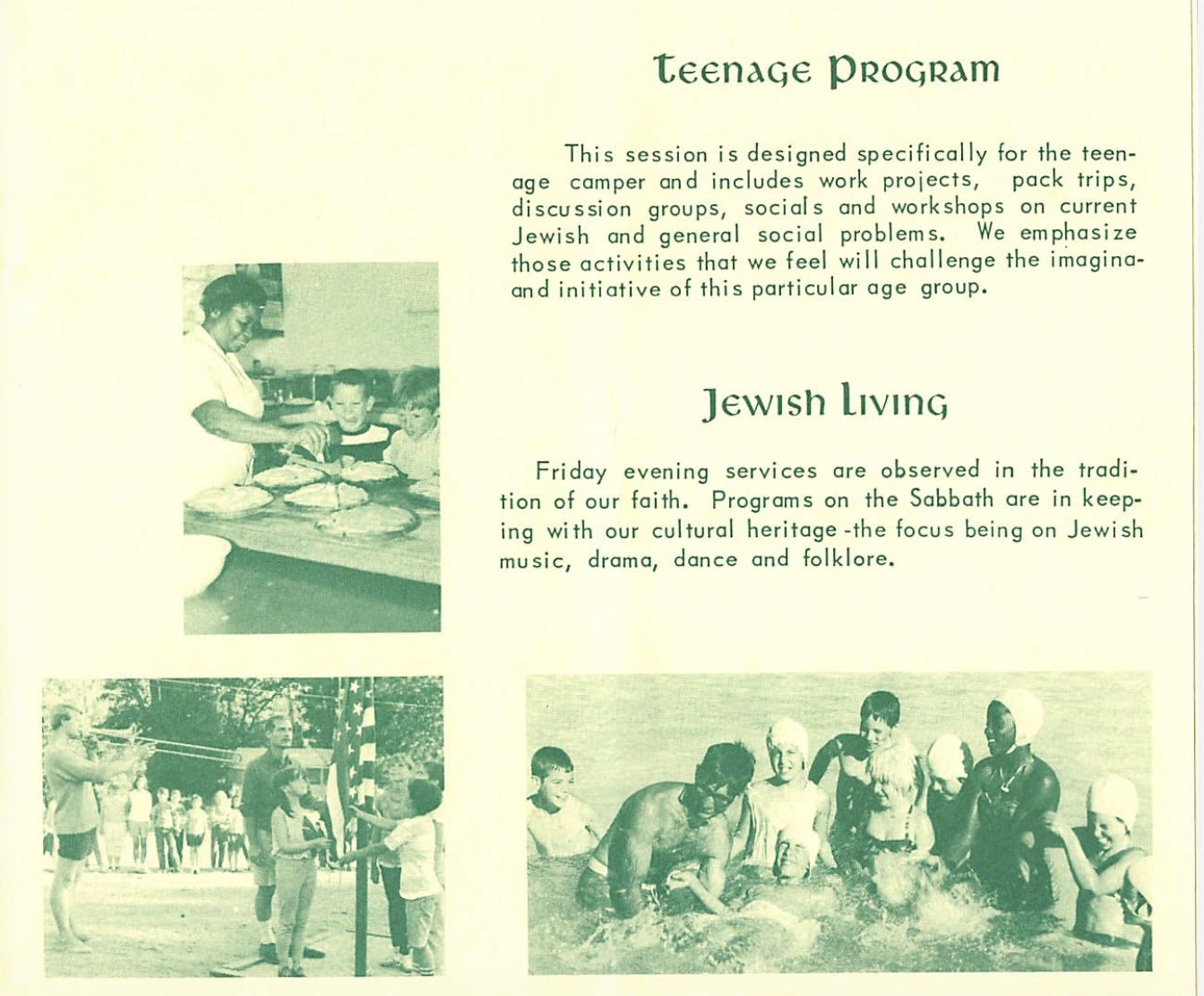
A page from a 1966 promotional brochure
A page from a 1966 promotional brochure


What that looked like in practice remains somewhat opaque. A song list from the period mixes standard camp classics and spirituals — “Michael, Row the Boat Ashore,” “Kumbaya,” “I’ve Been Working on the Railroad” — with Jewish camp staples like “David Melech Yisrael,” “Zum Gali,” and “Ma Tovu.”

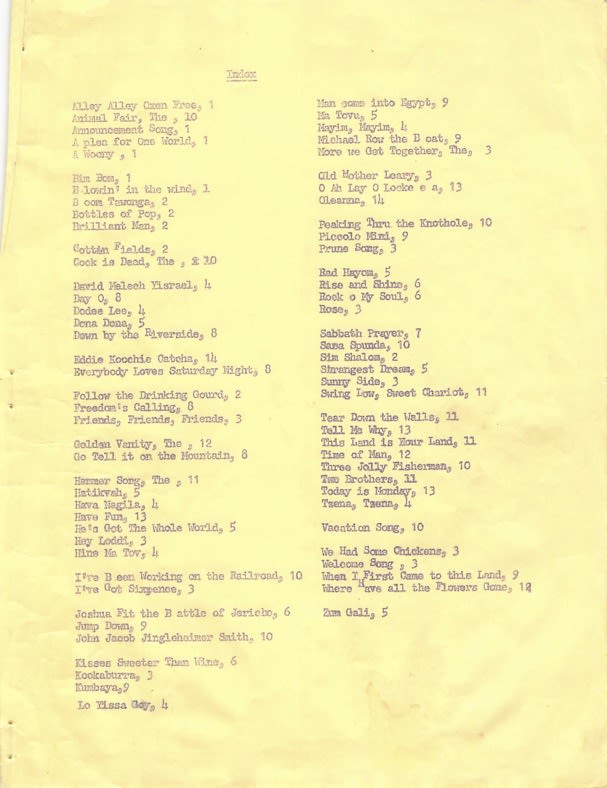
An undated table of contents from the late 1960s
An undated table of contents from the late 1960s
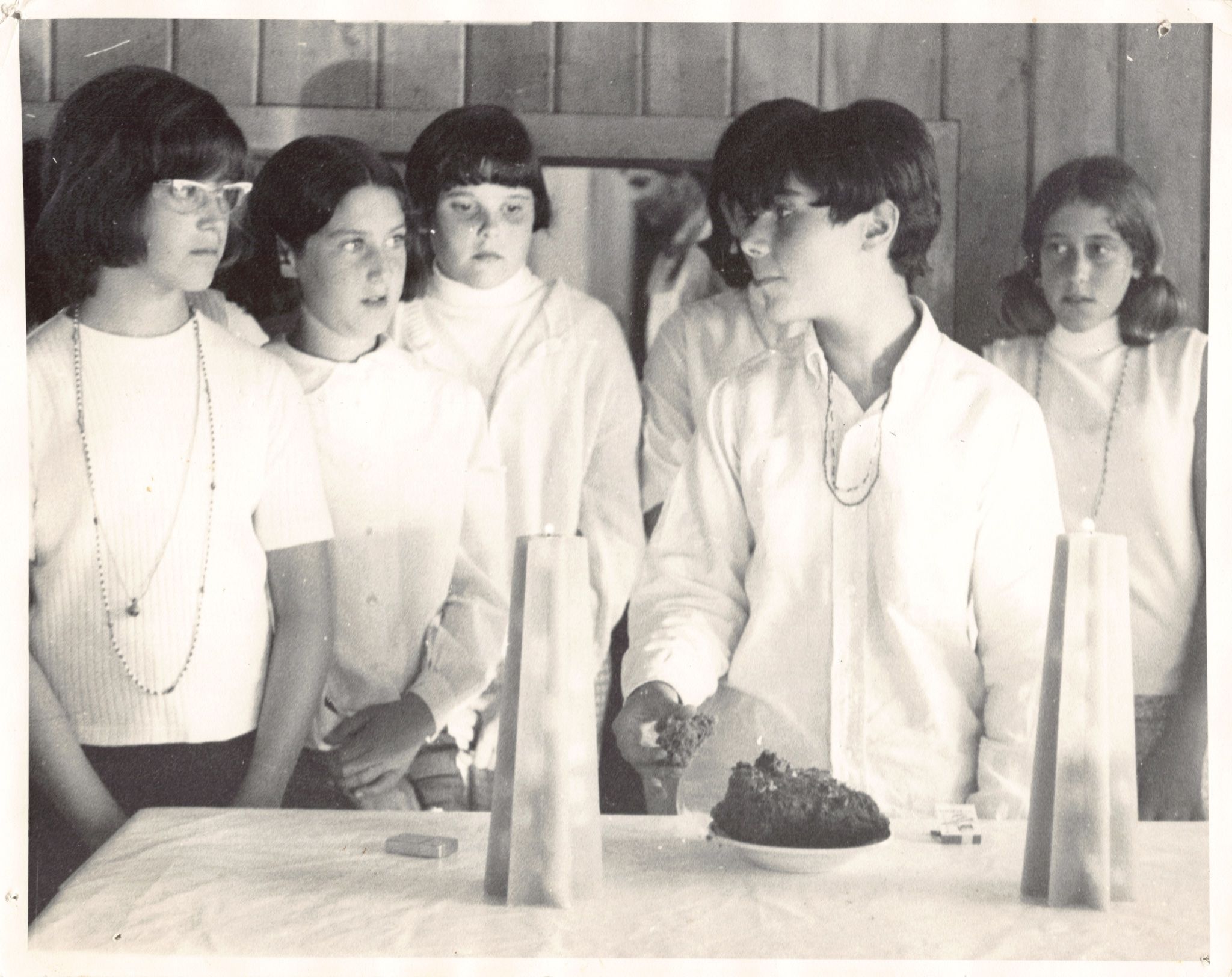
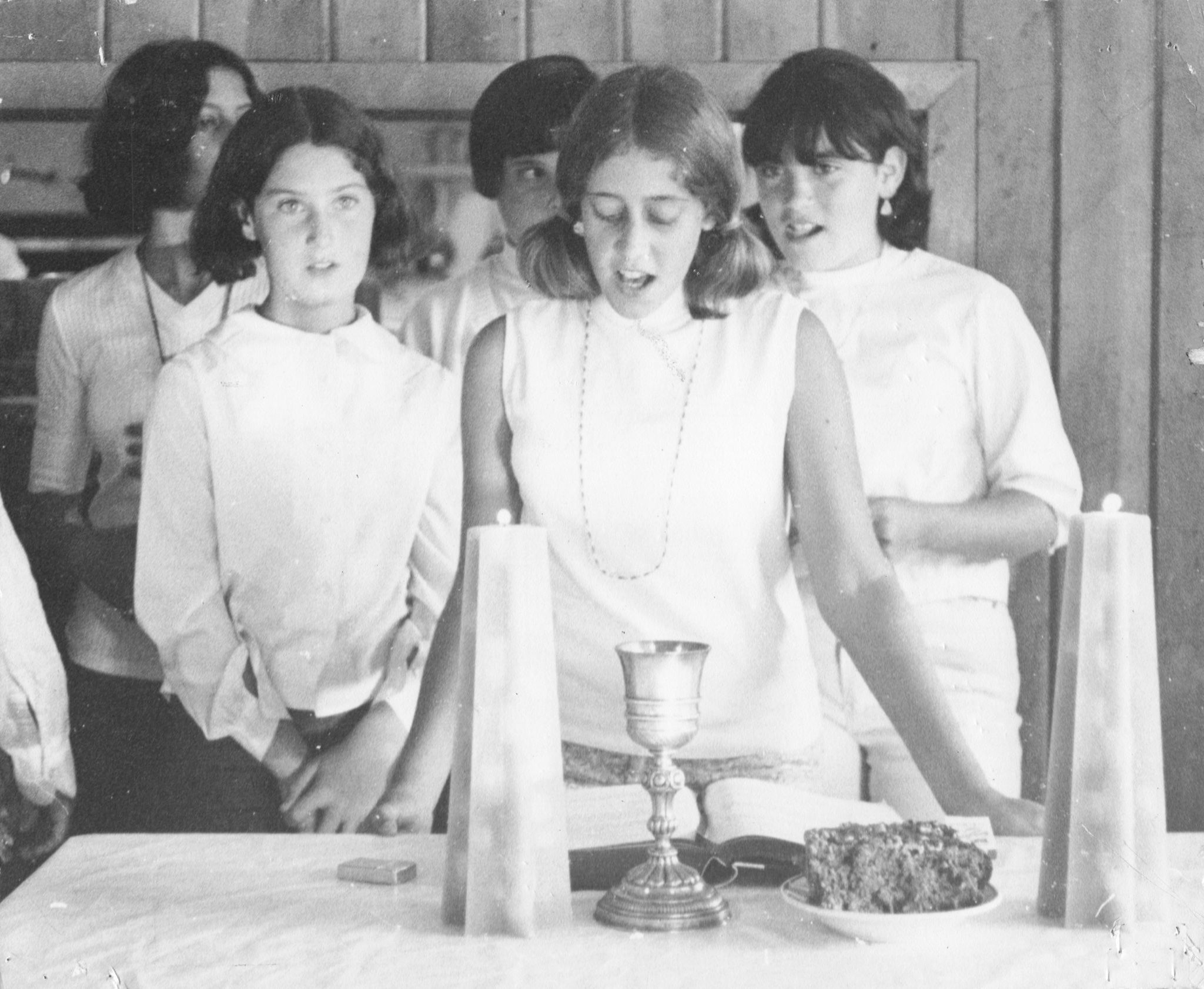
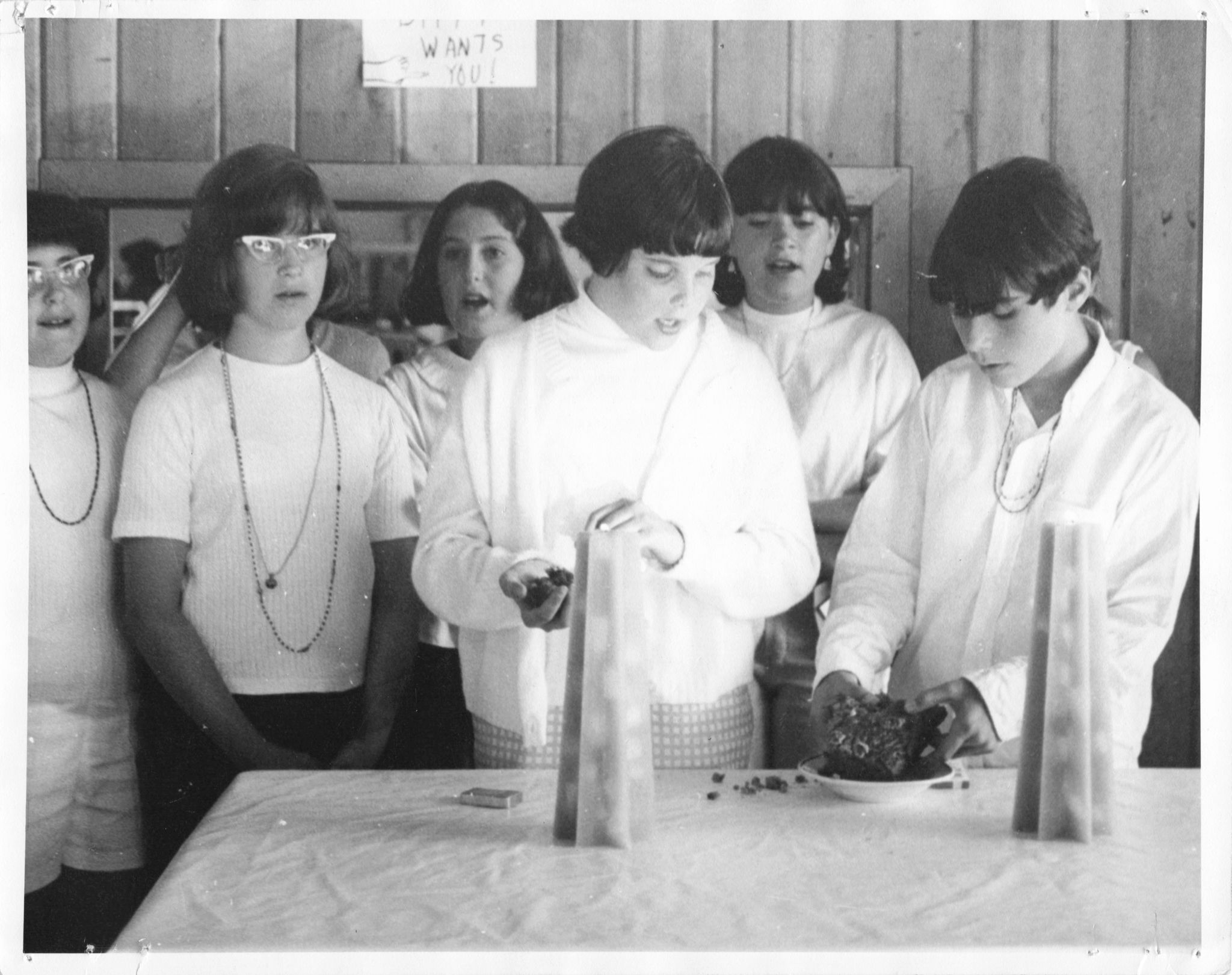
A few photographs survive of an Oneg Shabbat service in the Dining Hall.
These were taken around 1968.
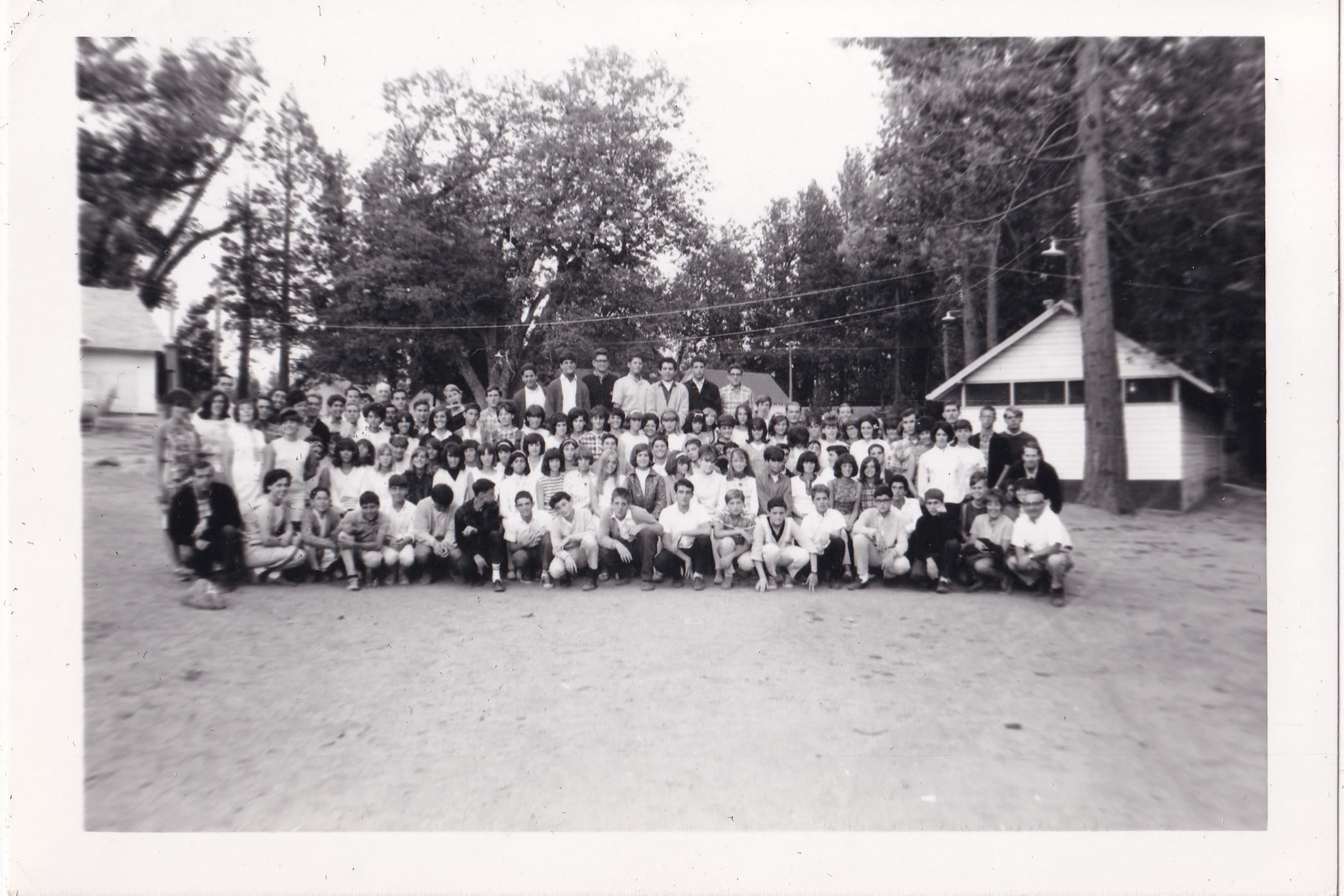
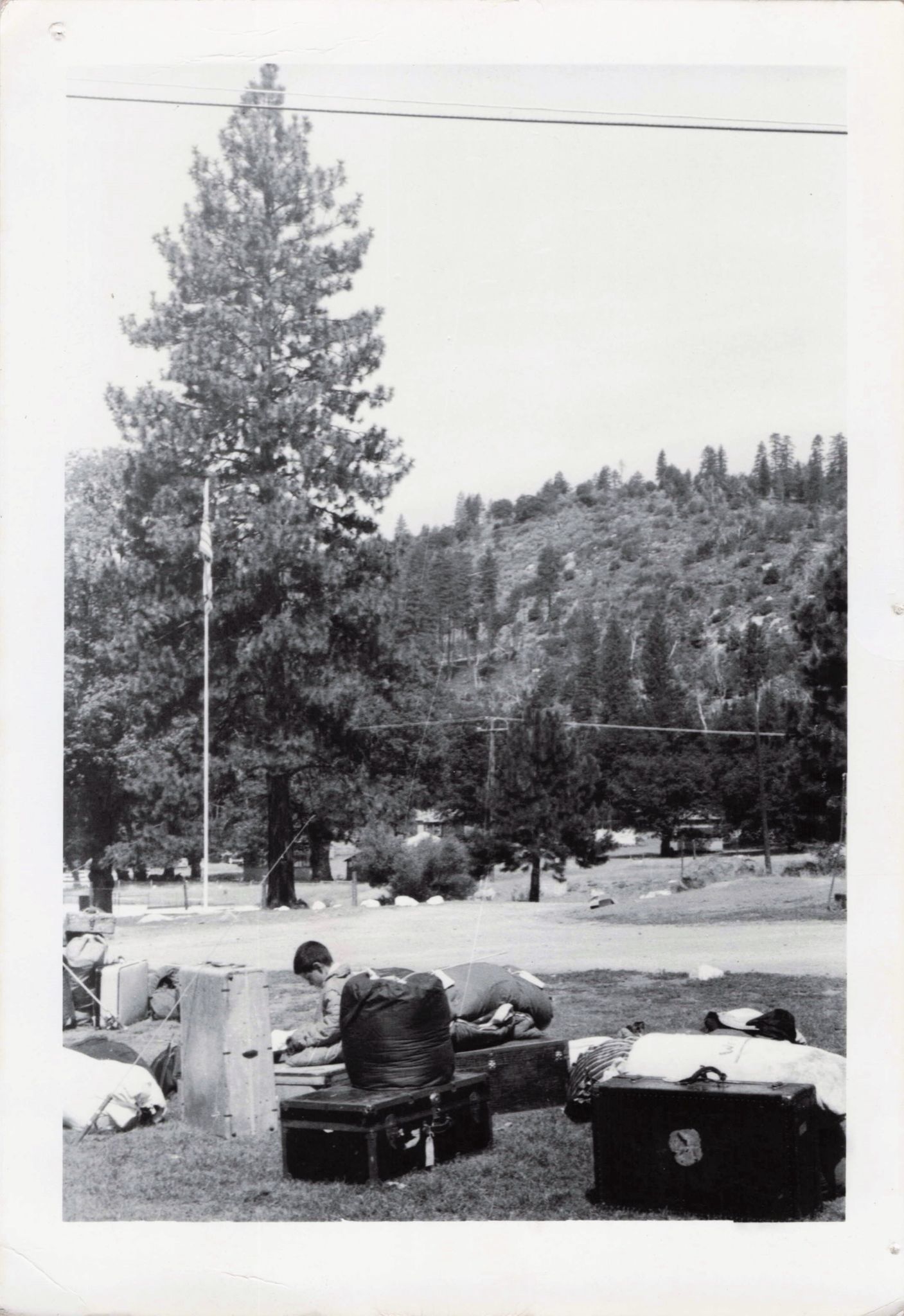
The photos that follow, all from the late 1960s, are nearly all that survive from the camp’s first years. They offer glimpses of what Tawonga looked like as it started out in its new location in the Stanislaus National Forest.

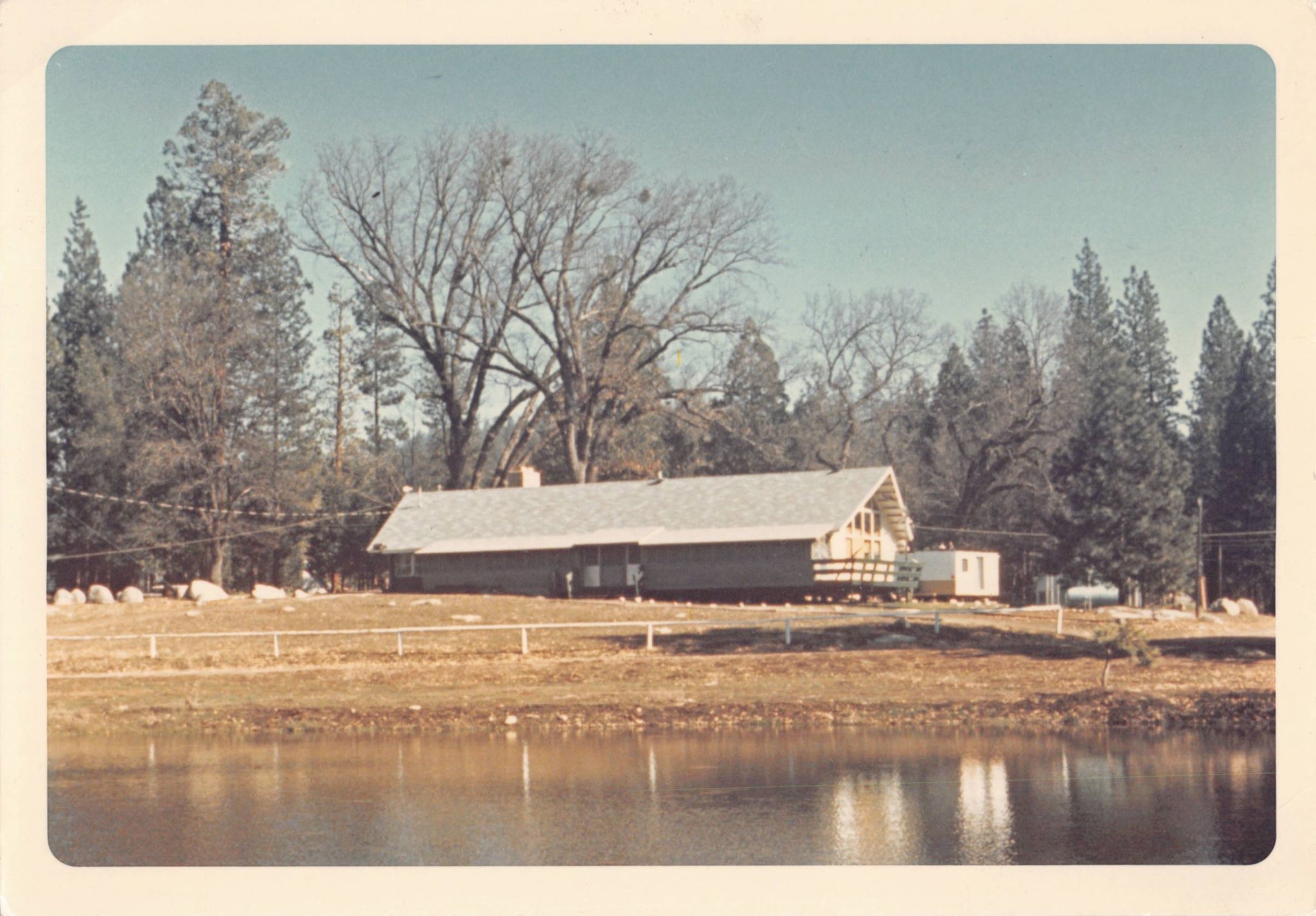

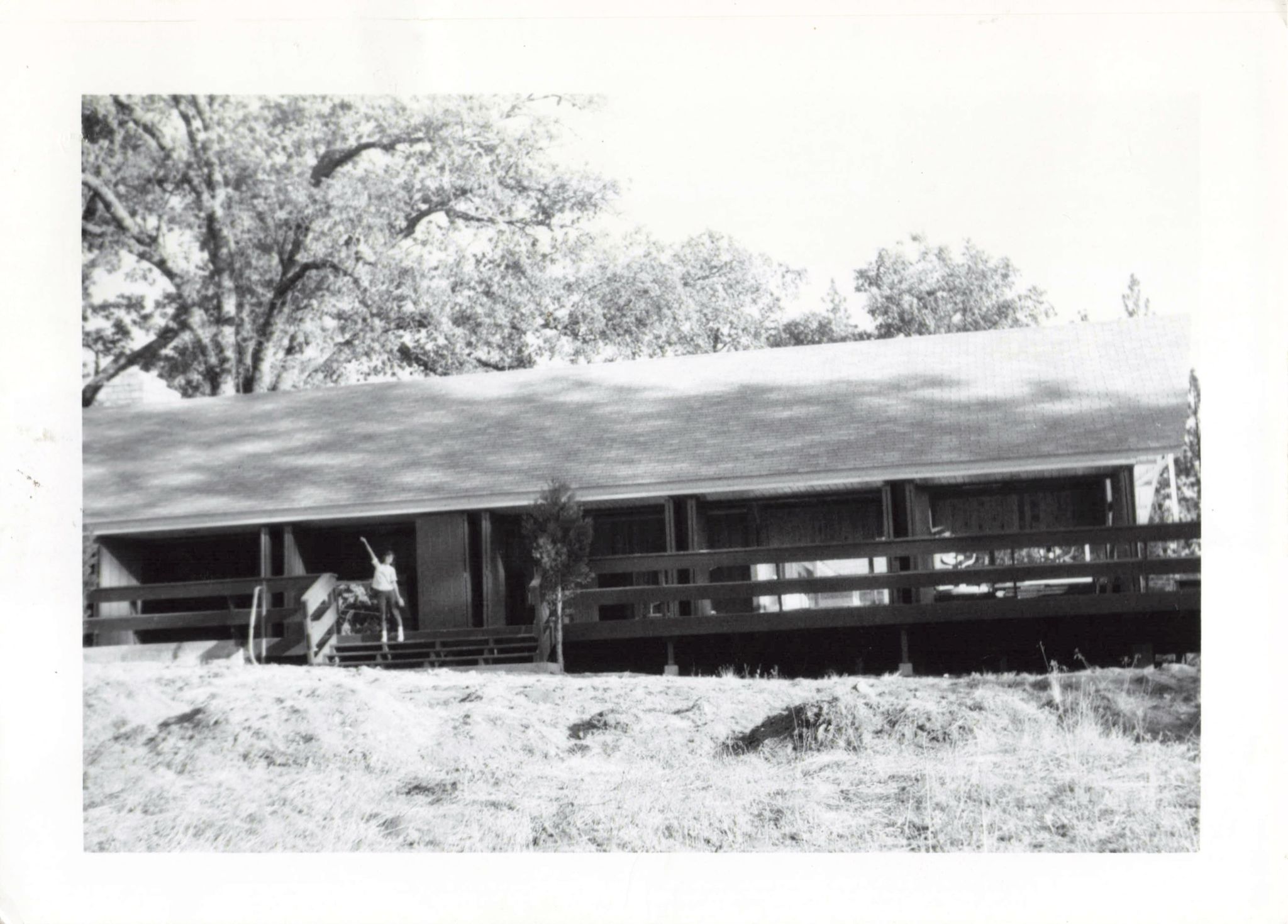

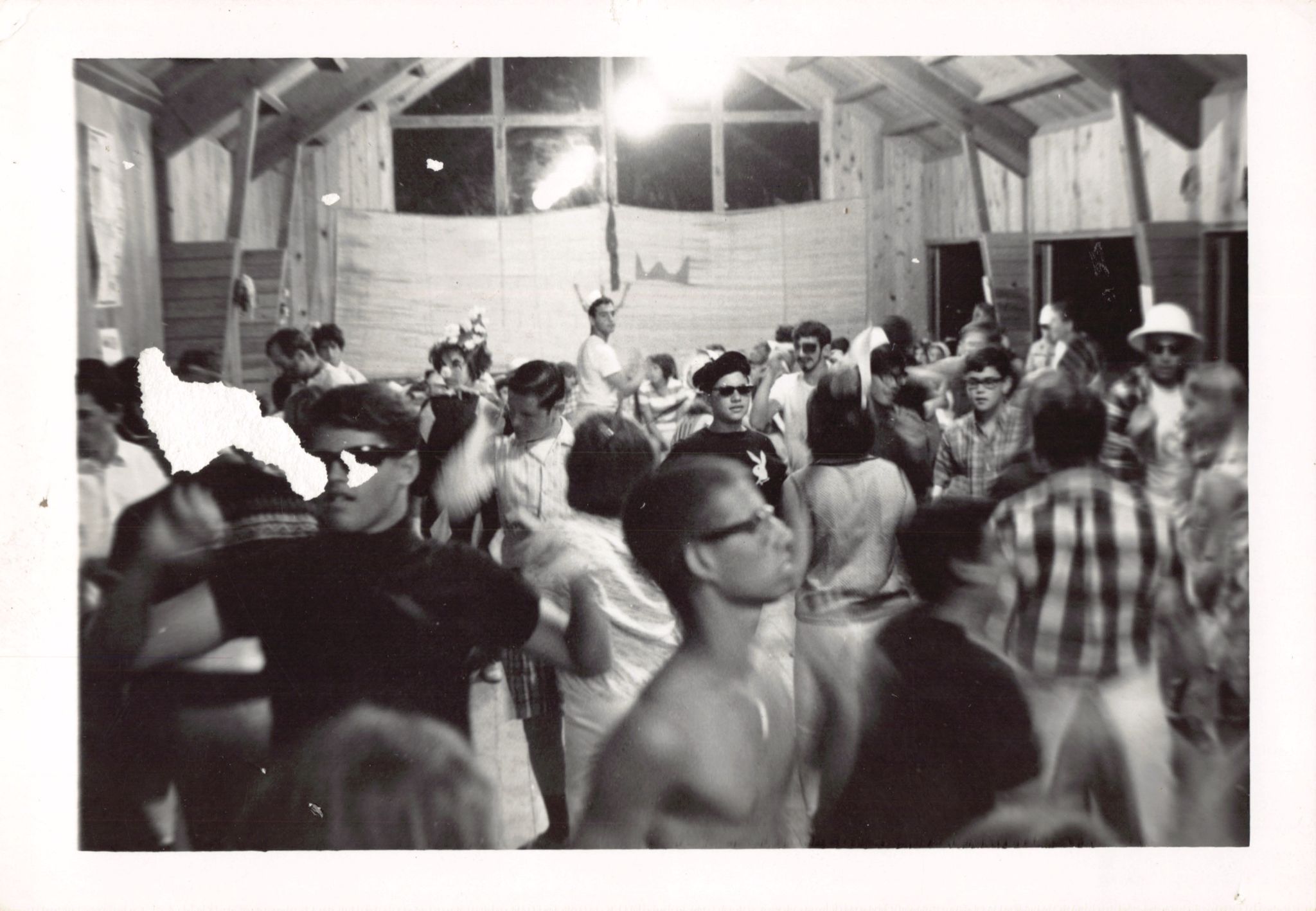

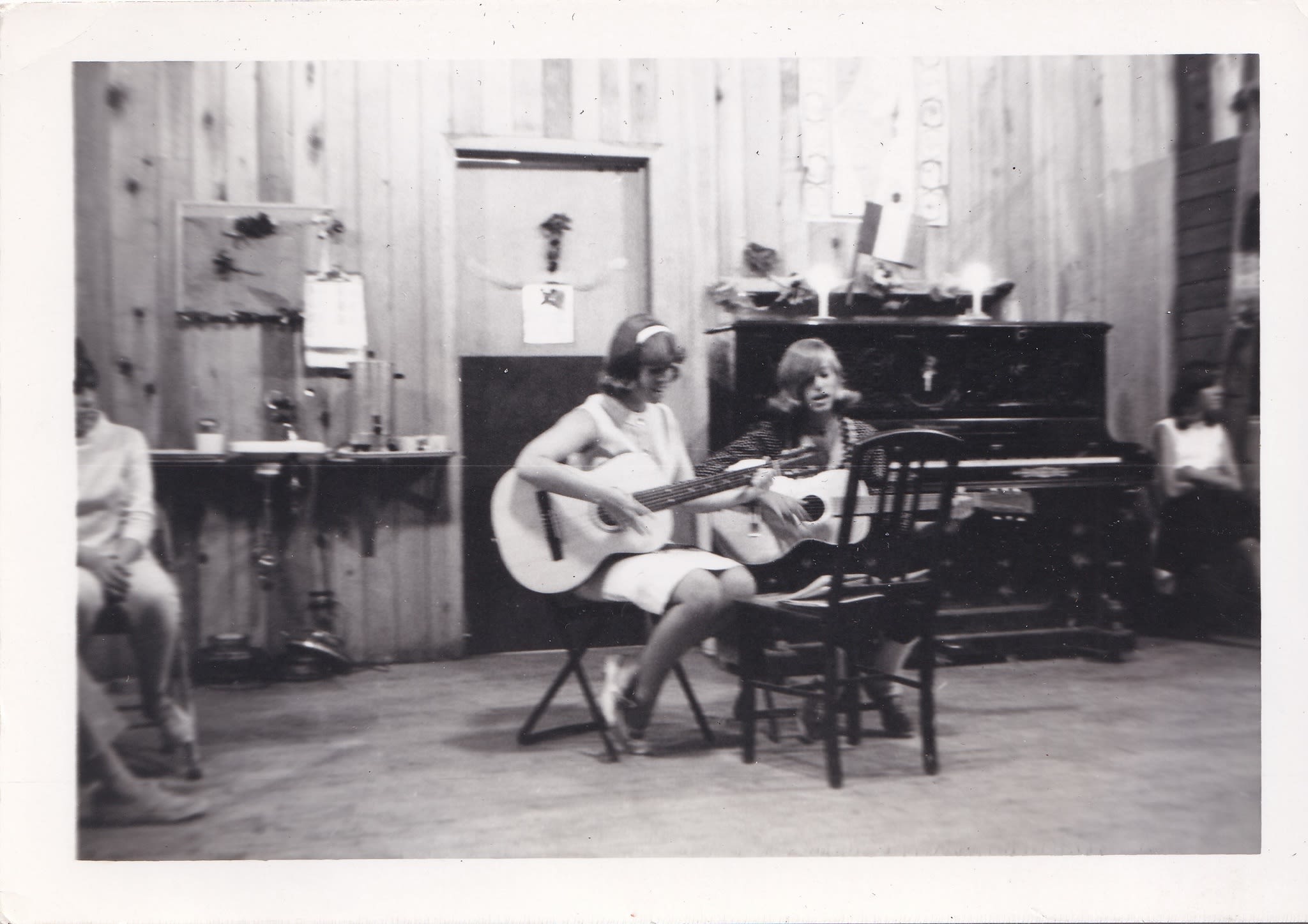

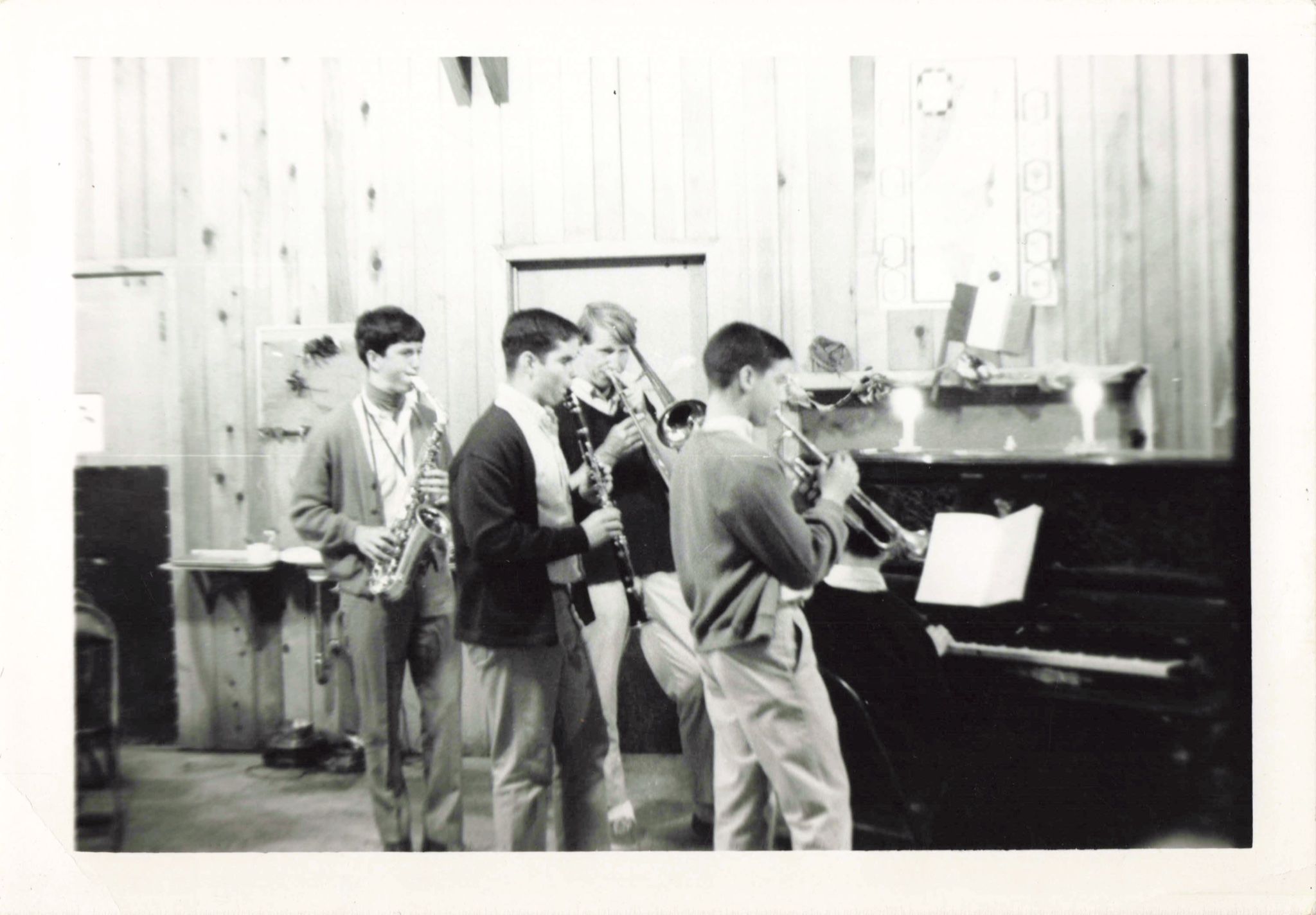

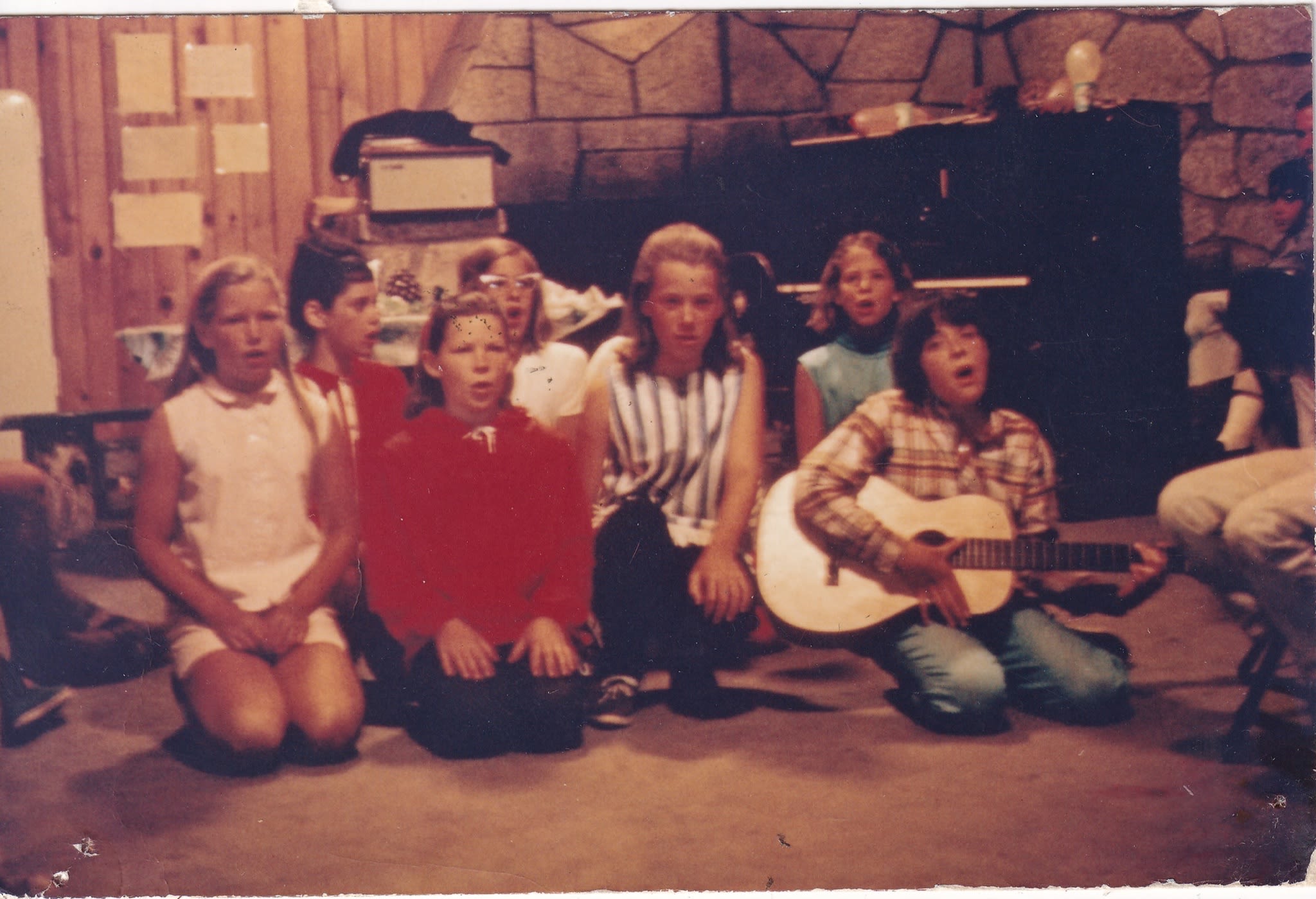

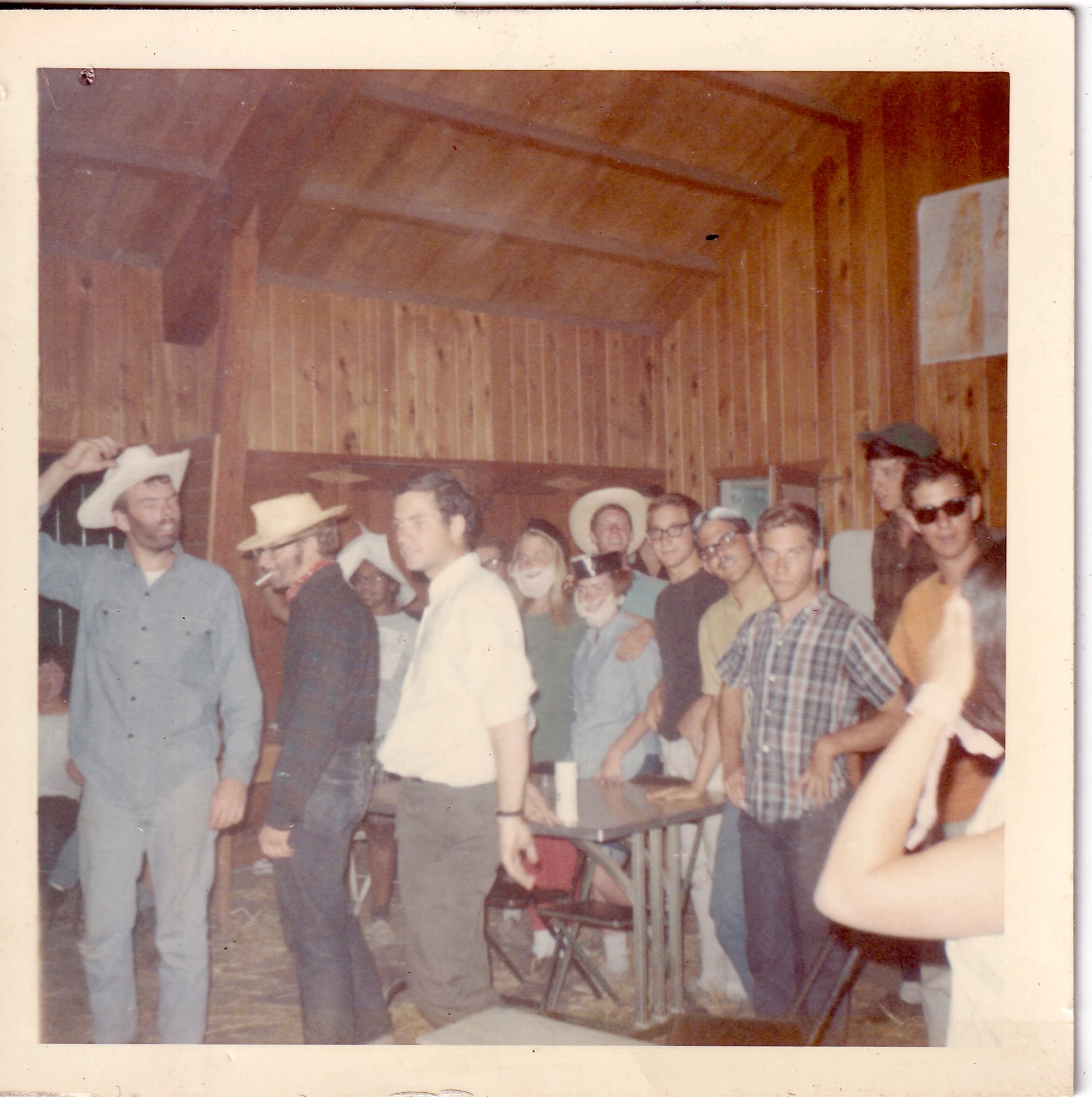

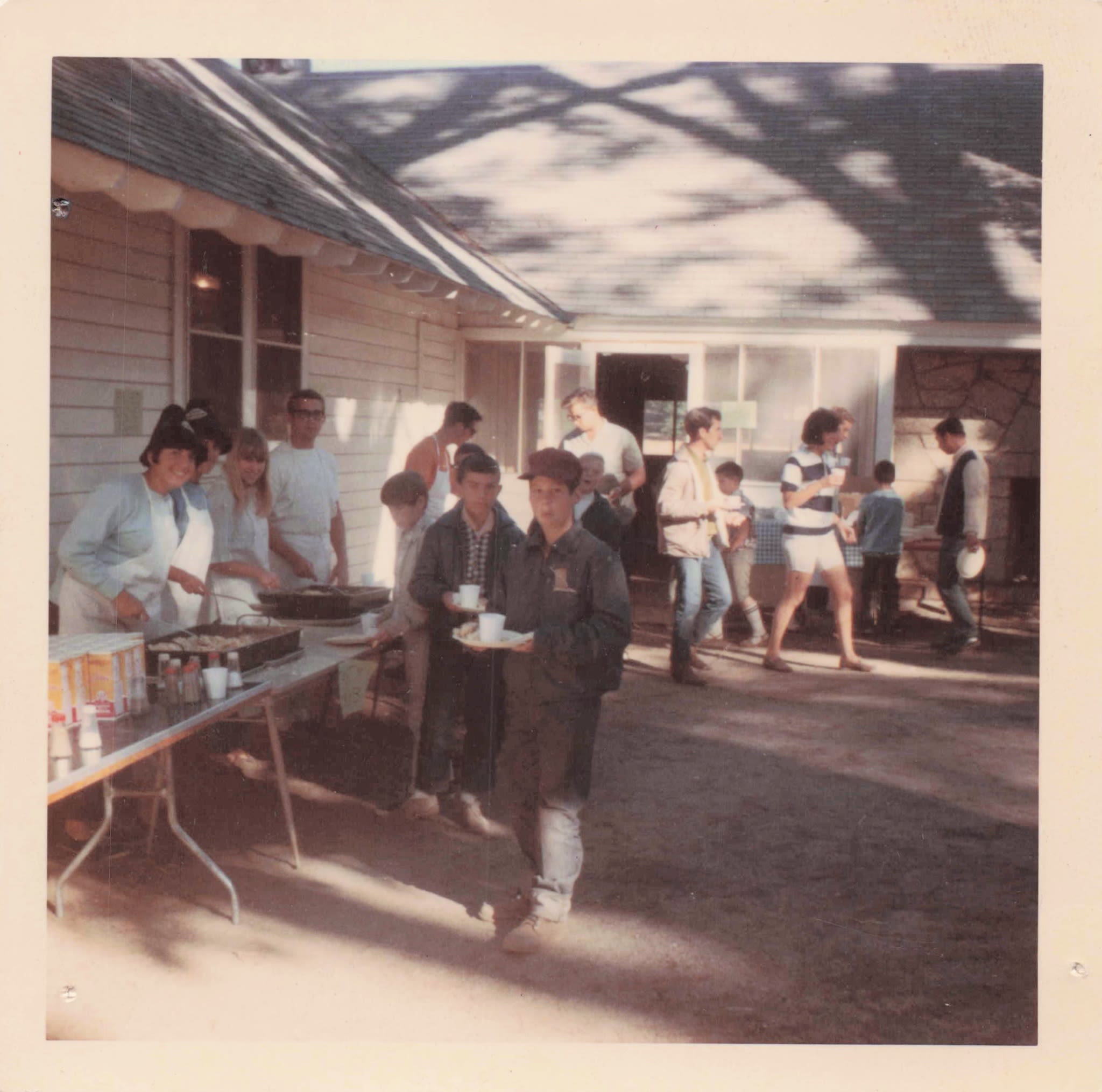

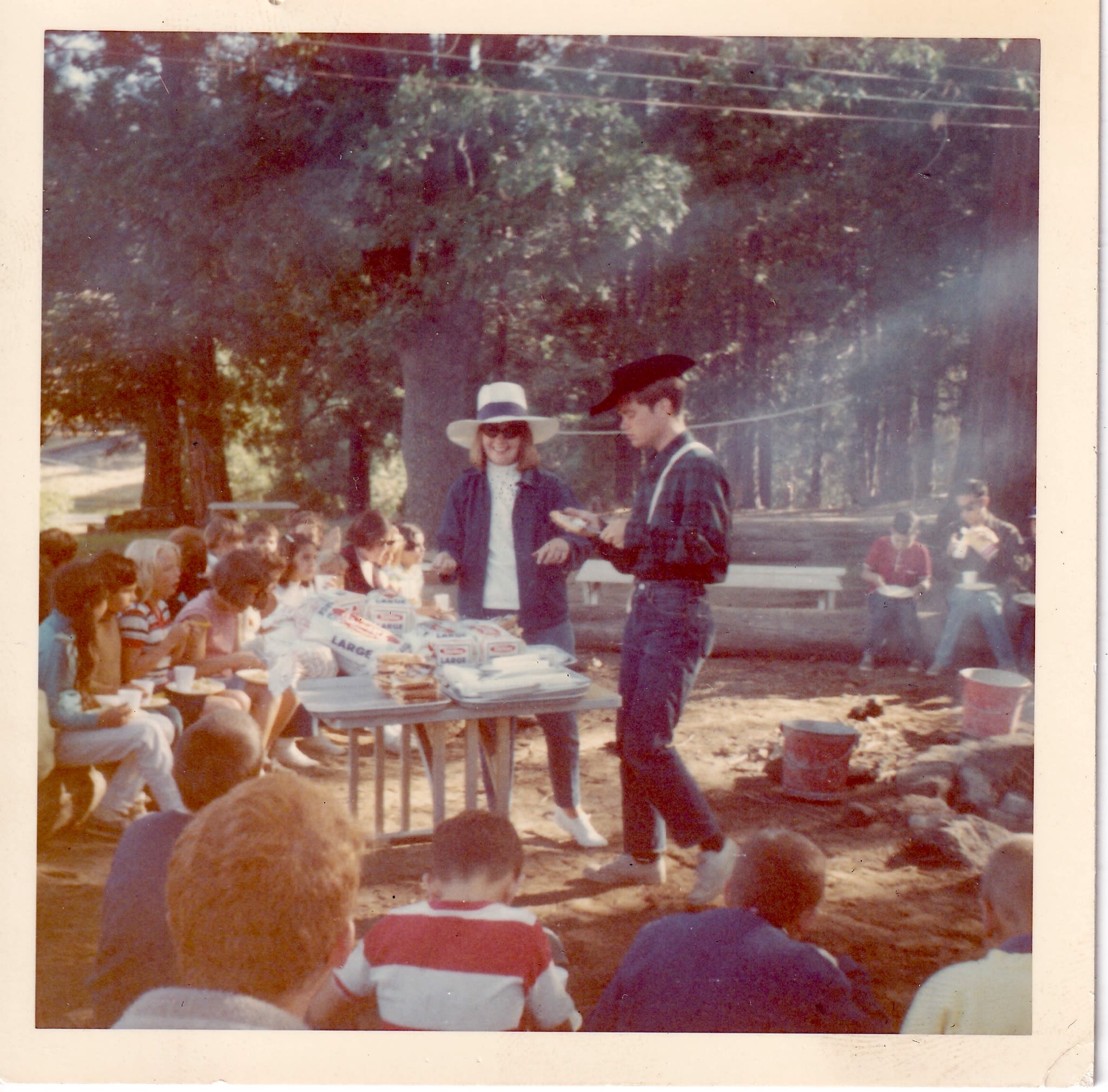





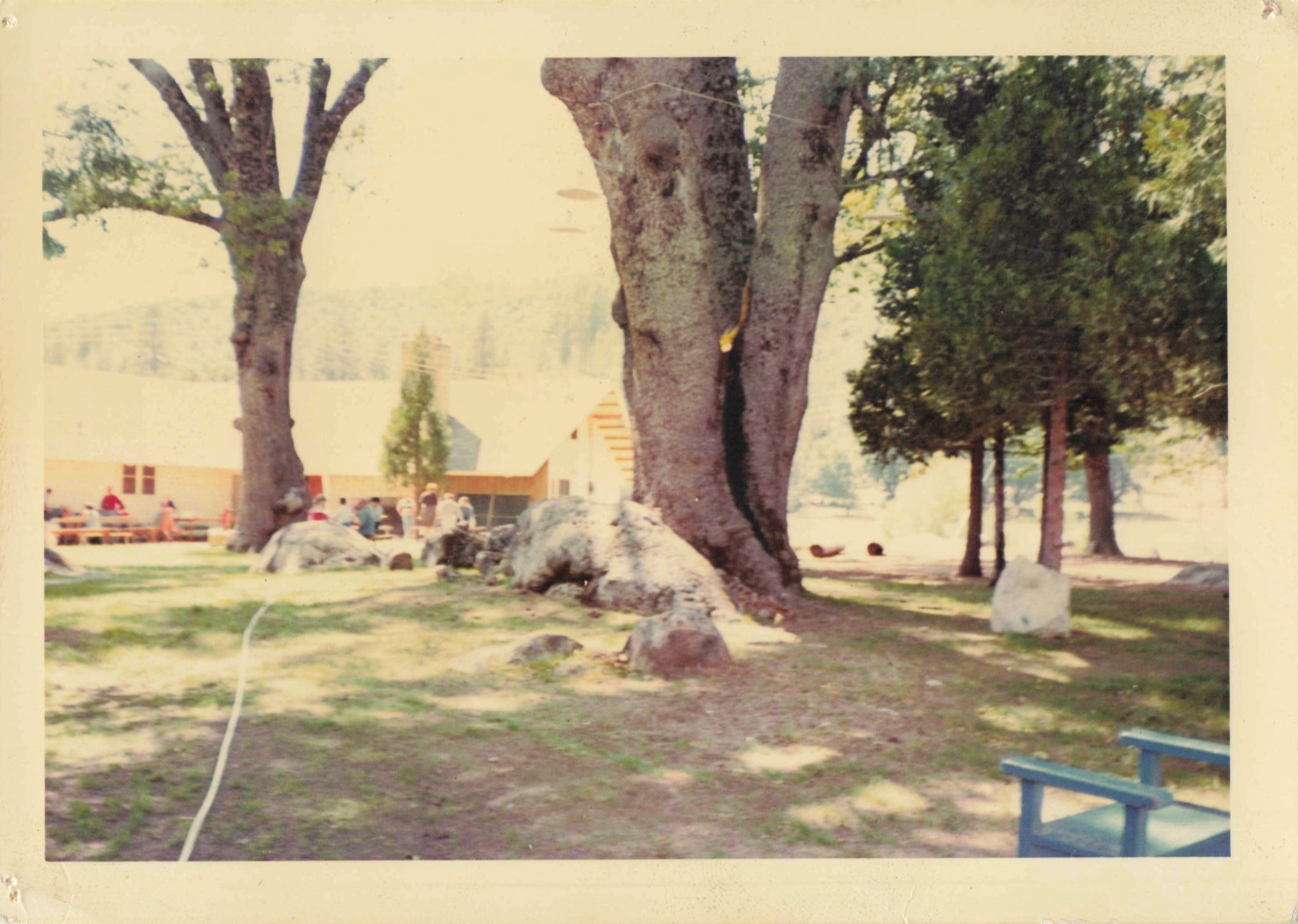

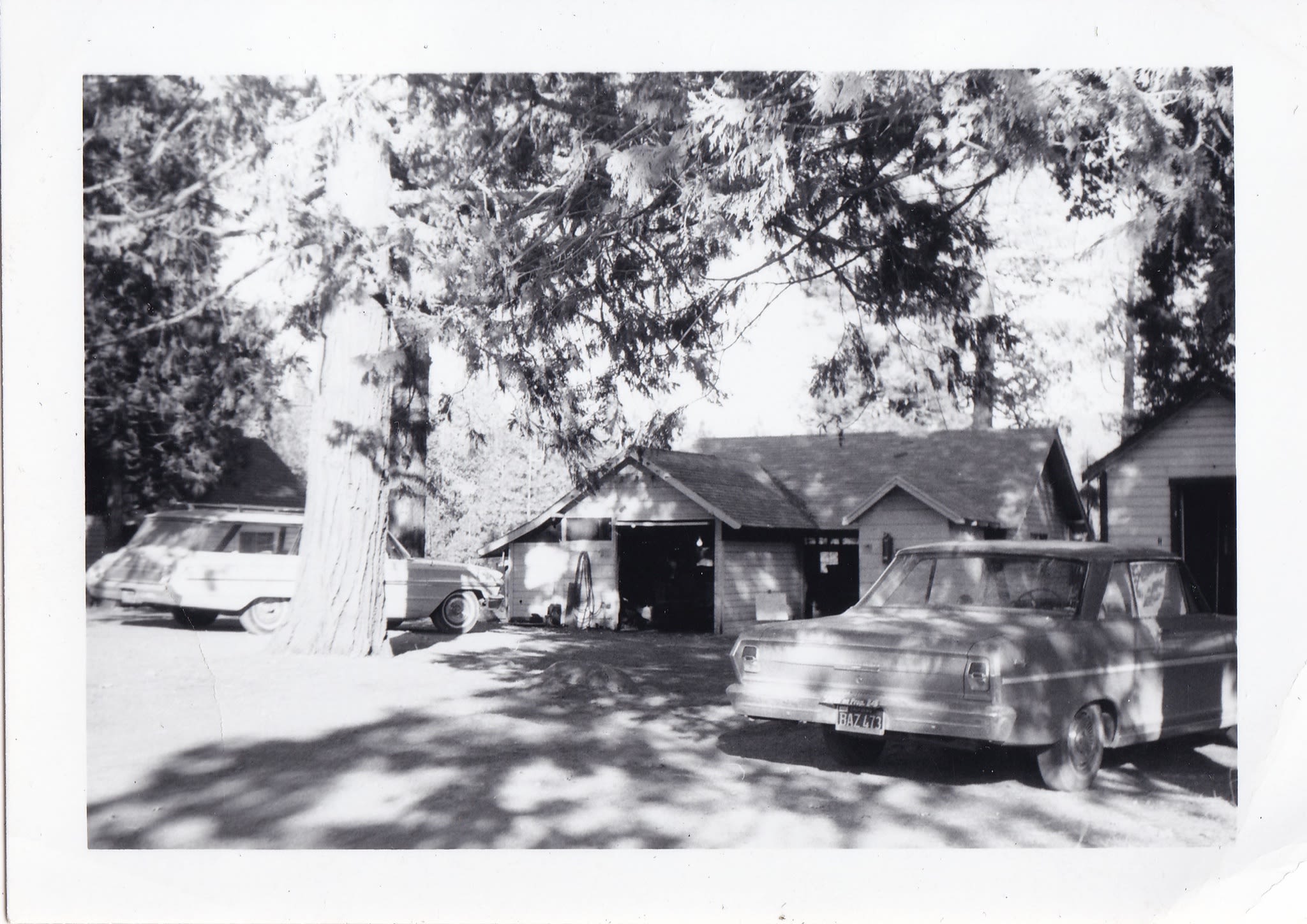

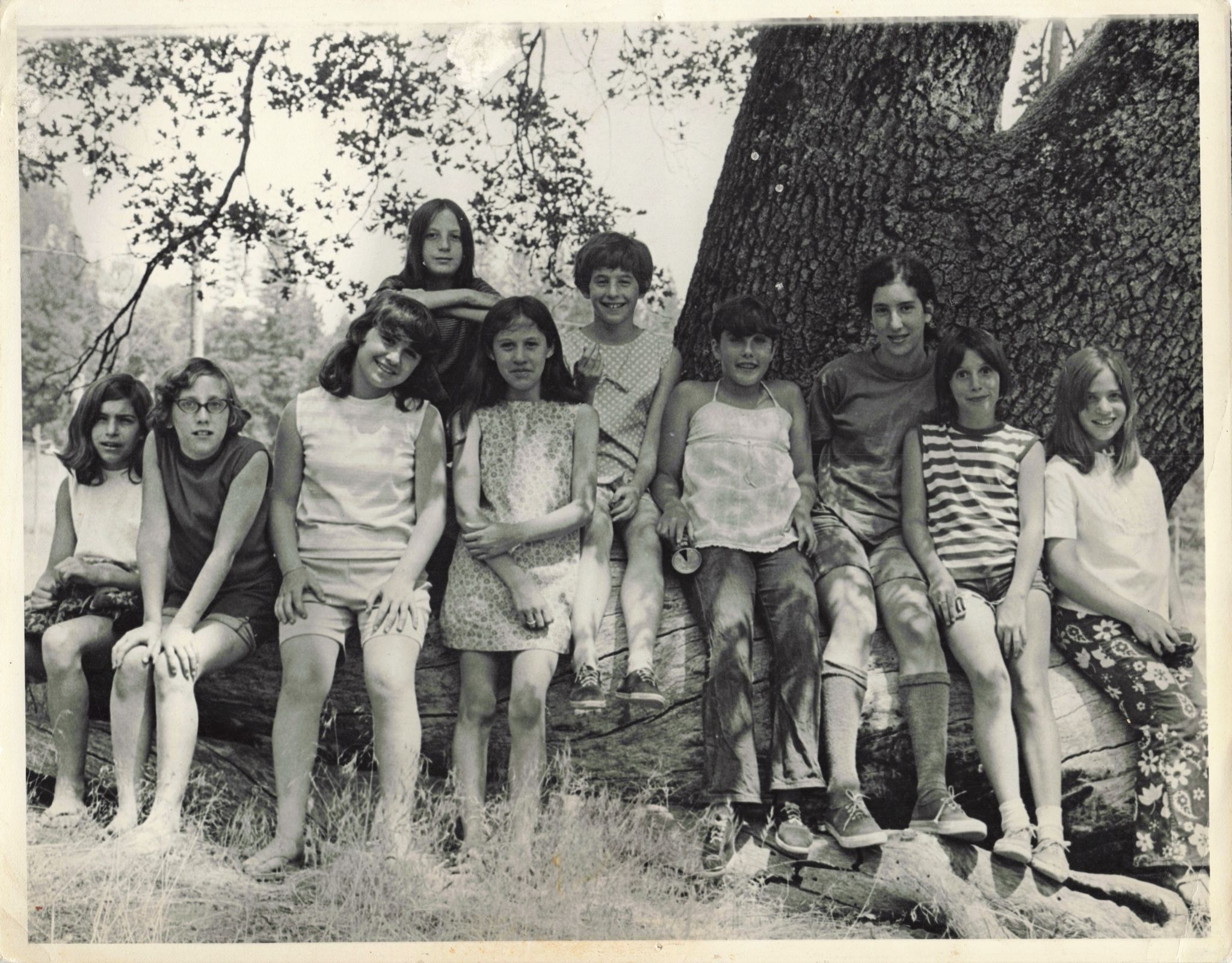

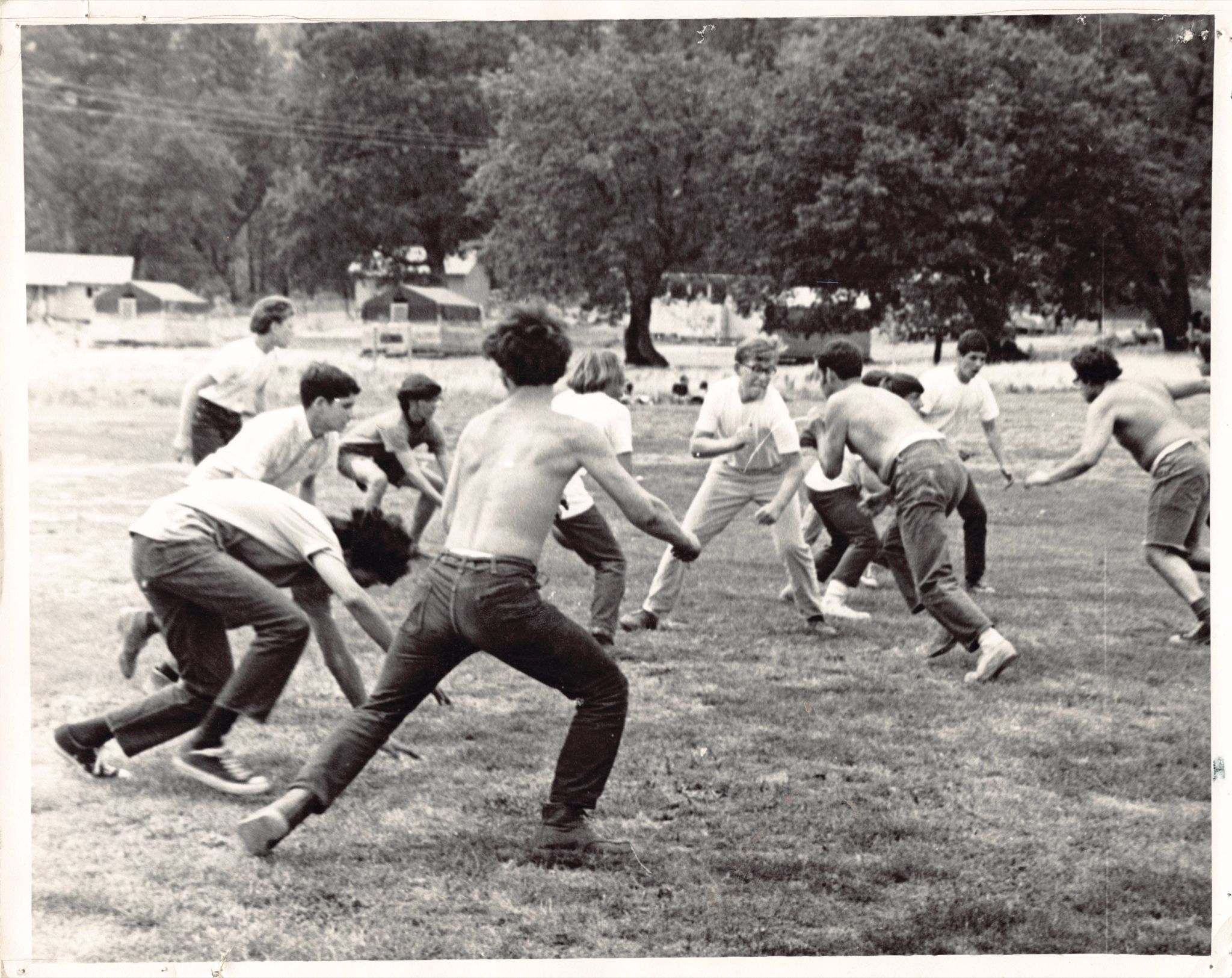

The Dining Hall in the late 1960s — this was the original structure that came with the property.
Another view, showing the porch.
Inside the Dining Hall, sometime between 1966 and 1969.
Music was already part of camp life.
This photo, likely from 1966 or 1967, shows an early song session in the Dining Hall.
Another image from the same session.
And here’s one of a different Dining Hall song session.
Counselors in costume, undated.
Meal service on the patio.
The setup remains familiar, even if the structure itself has changed.
Counselors serving lunch.
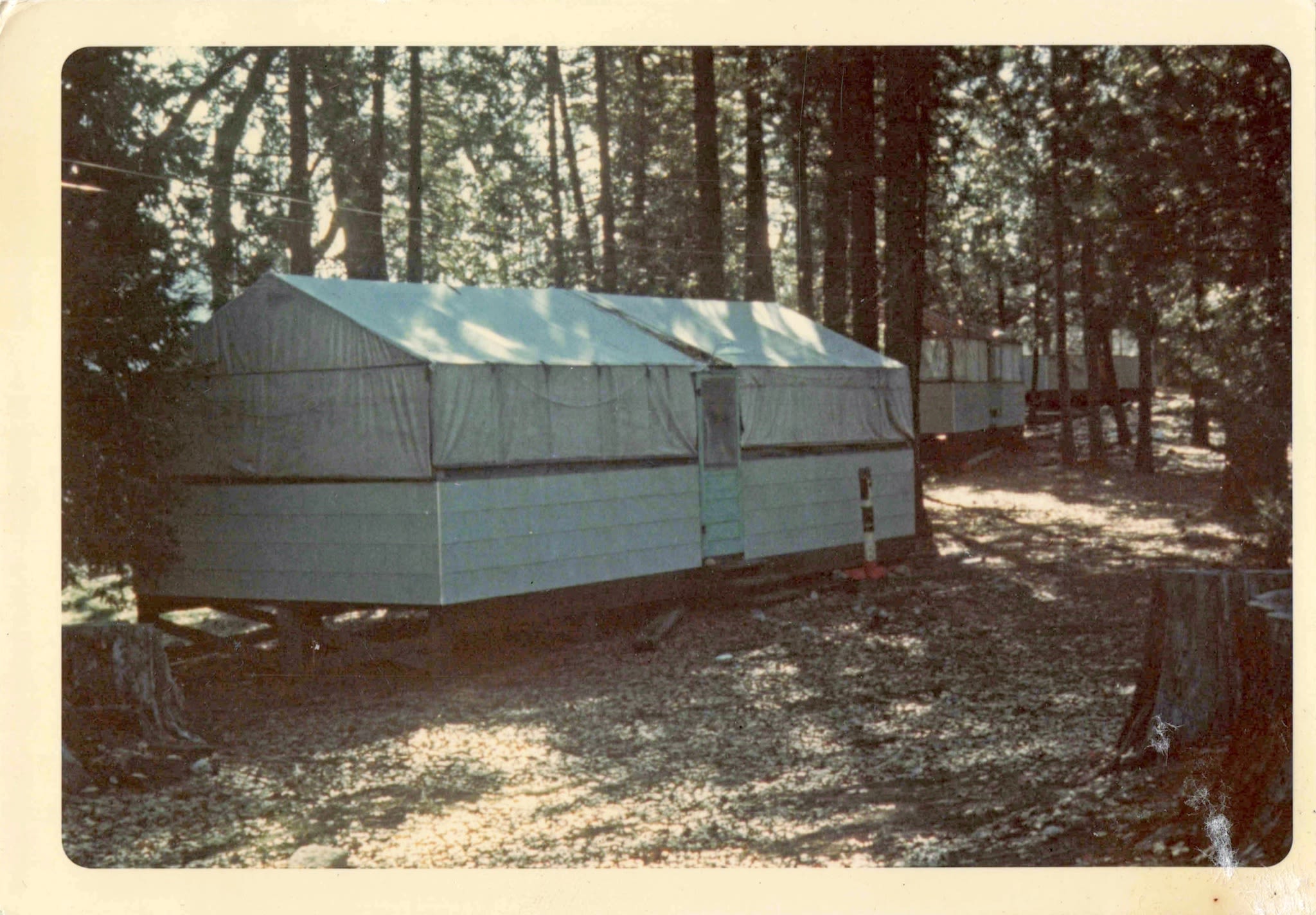
Tent cabins on what used to be called the “Boys’ Side” — remnants of the camp that Tawonga purchased in 1965.
A different cabin design, also original to the property.
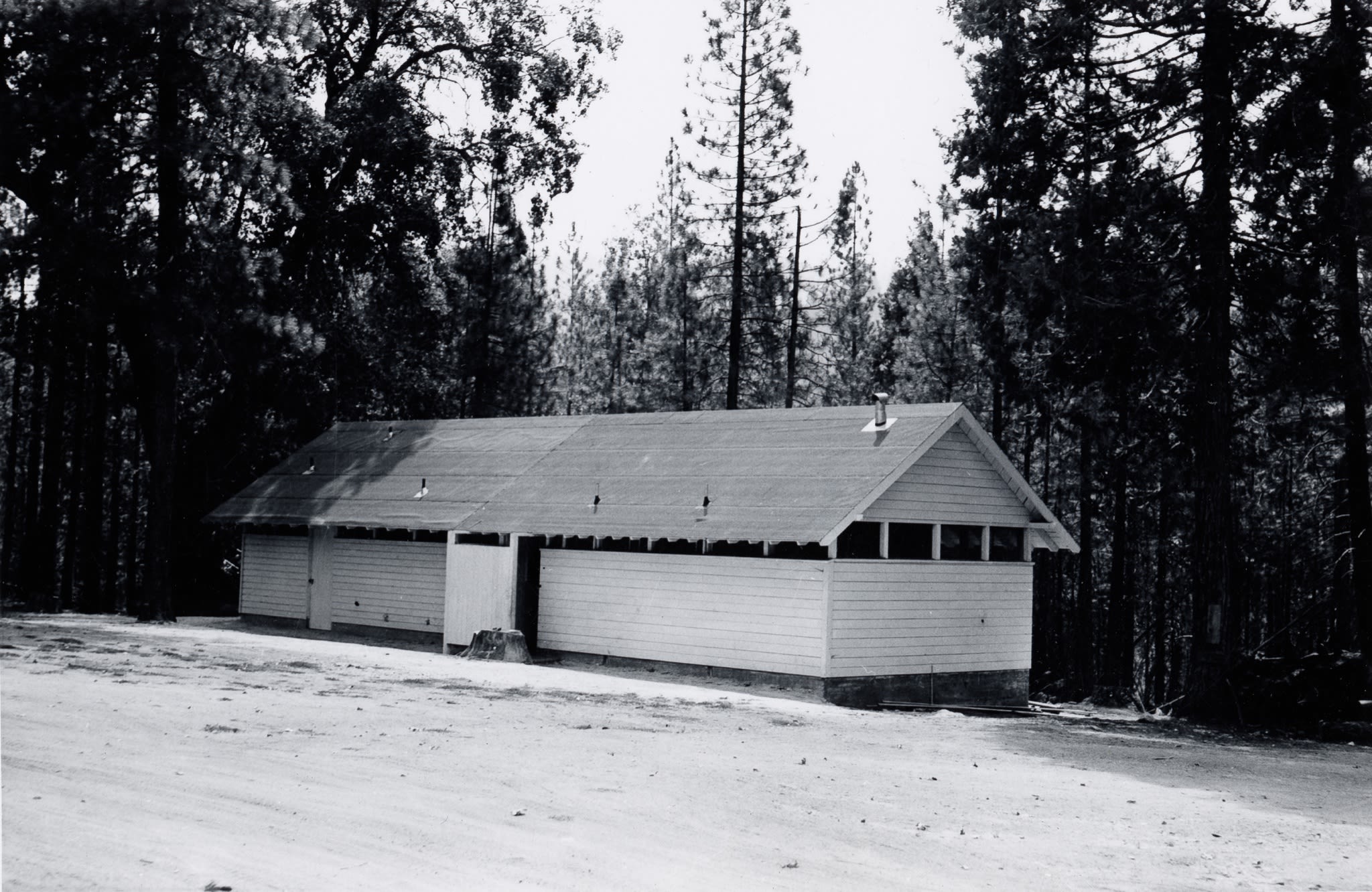
The old Boys’ Bathhouse, which was replaced in 2018 by today’s Central Bathhouse .
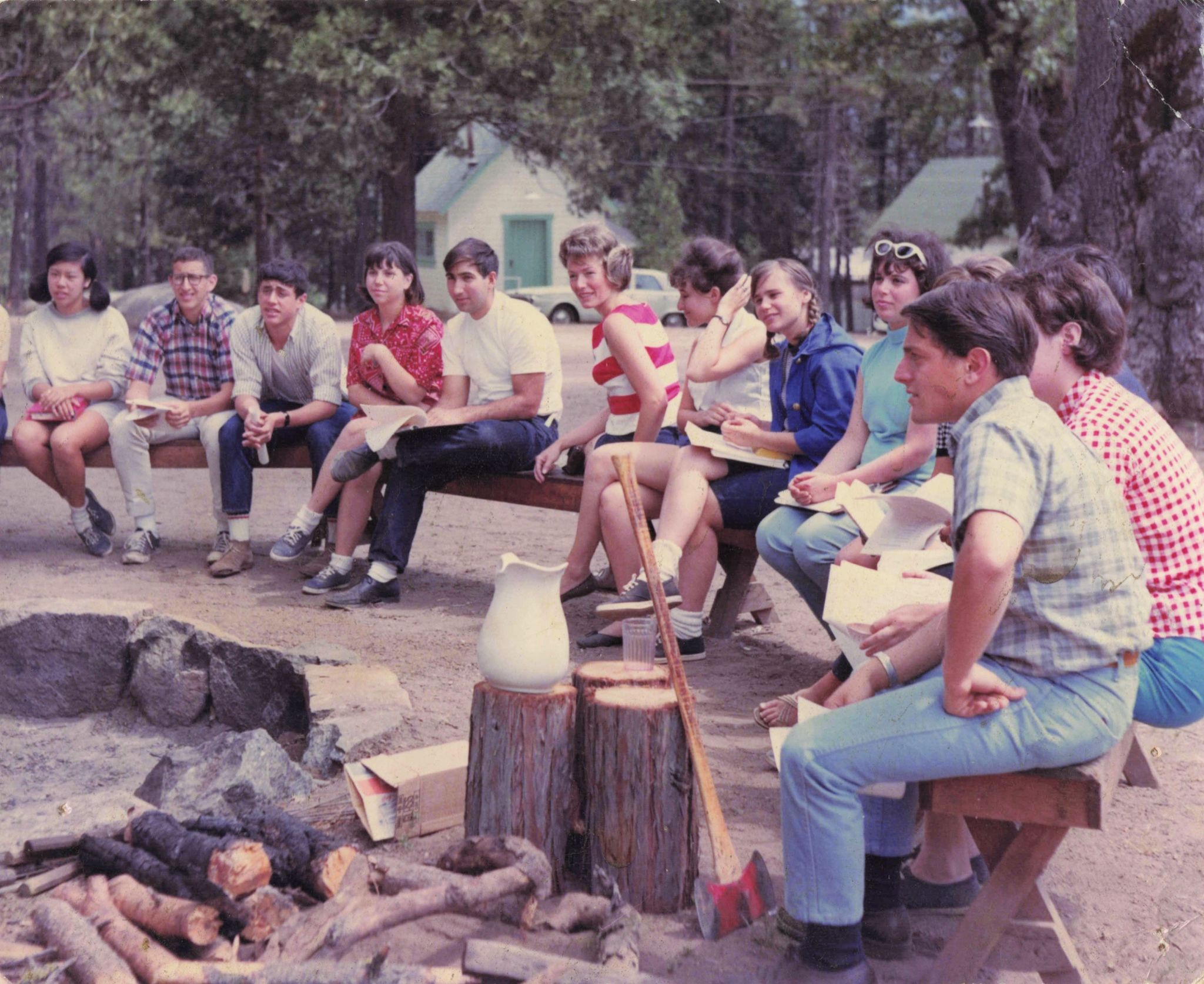
A counselor training session in the center of camp (the area near the stage we now call the Golden Triangle), likely 1966 or 1967.
The center of camp, viewed from near where the Health Center entrance stands today, looking toward the Dining Hall and lake.
An unknown building, most likely the caretaker’s house, which was originally located in the central part of camp near the Health Center (then called the Infirmary) and the Dining Hall.
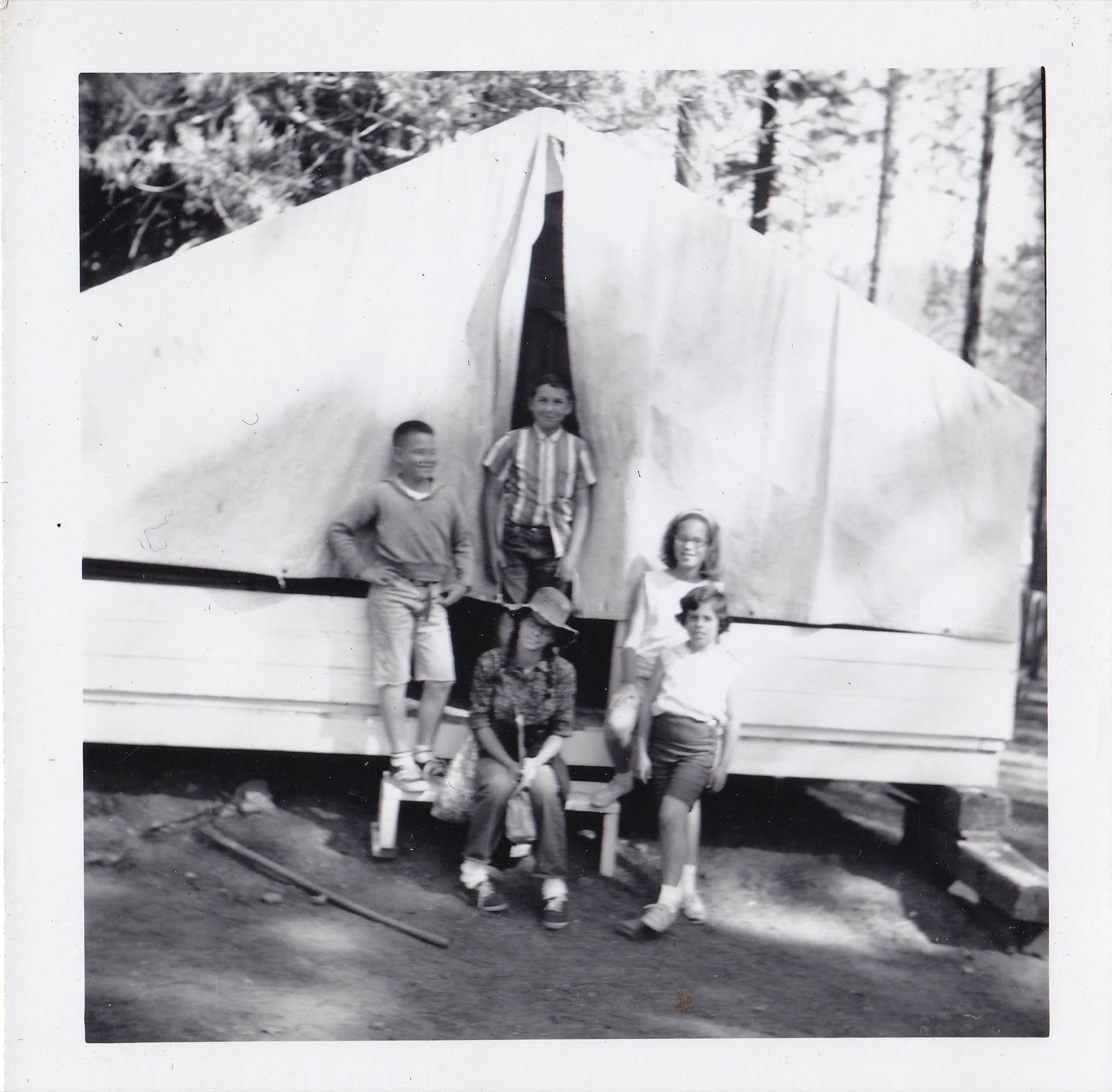
A girls’ bunk in the late 1960s.
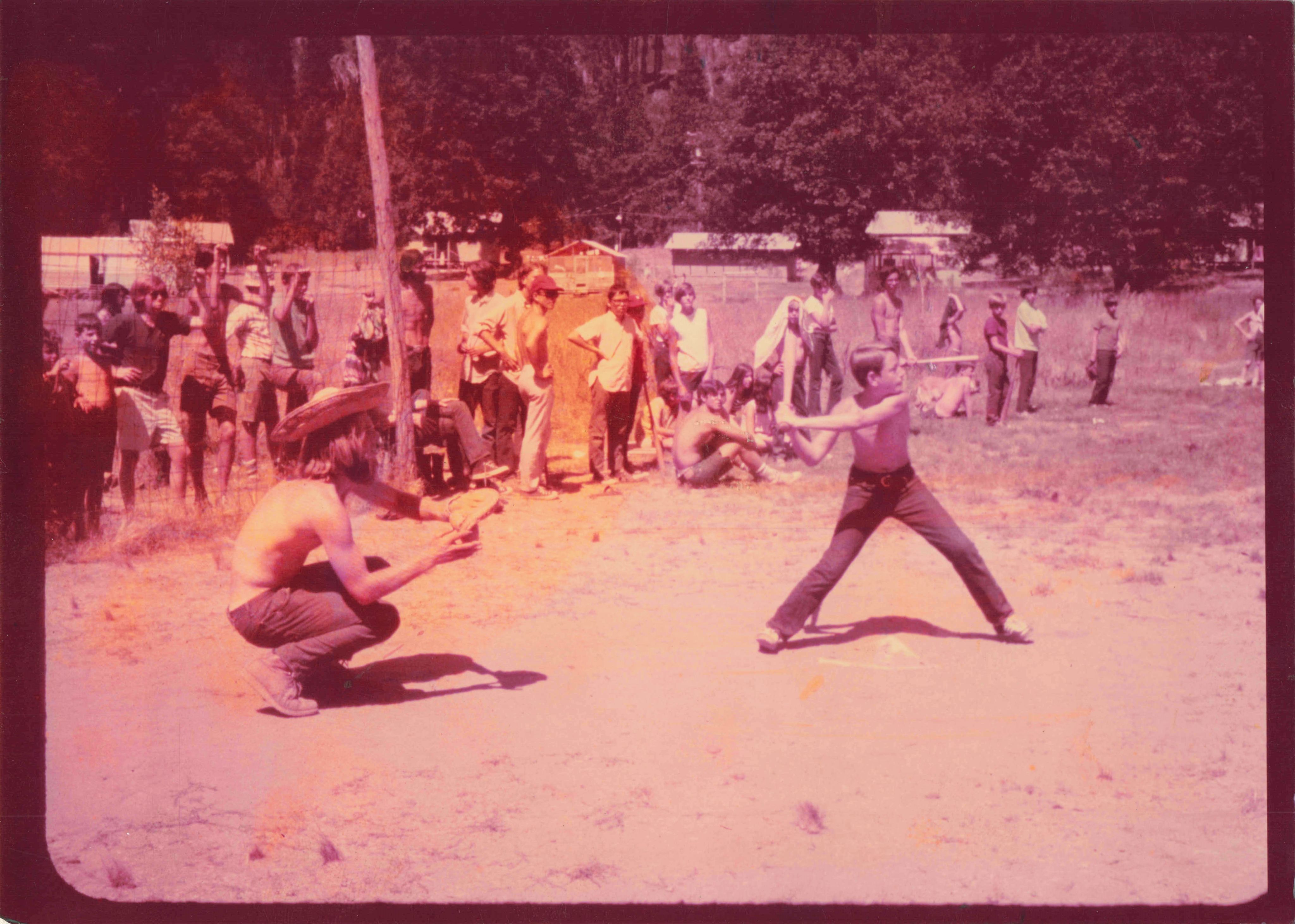
Boys playing on the field, undated.
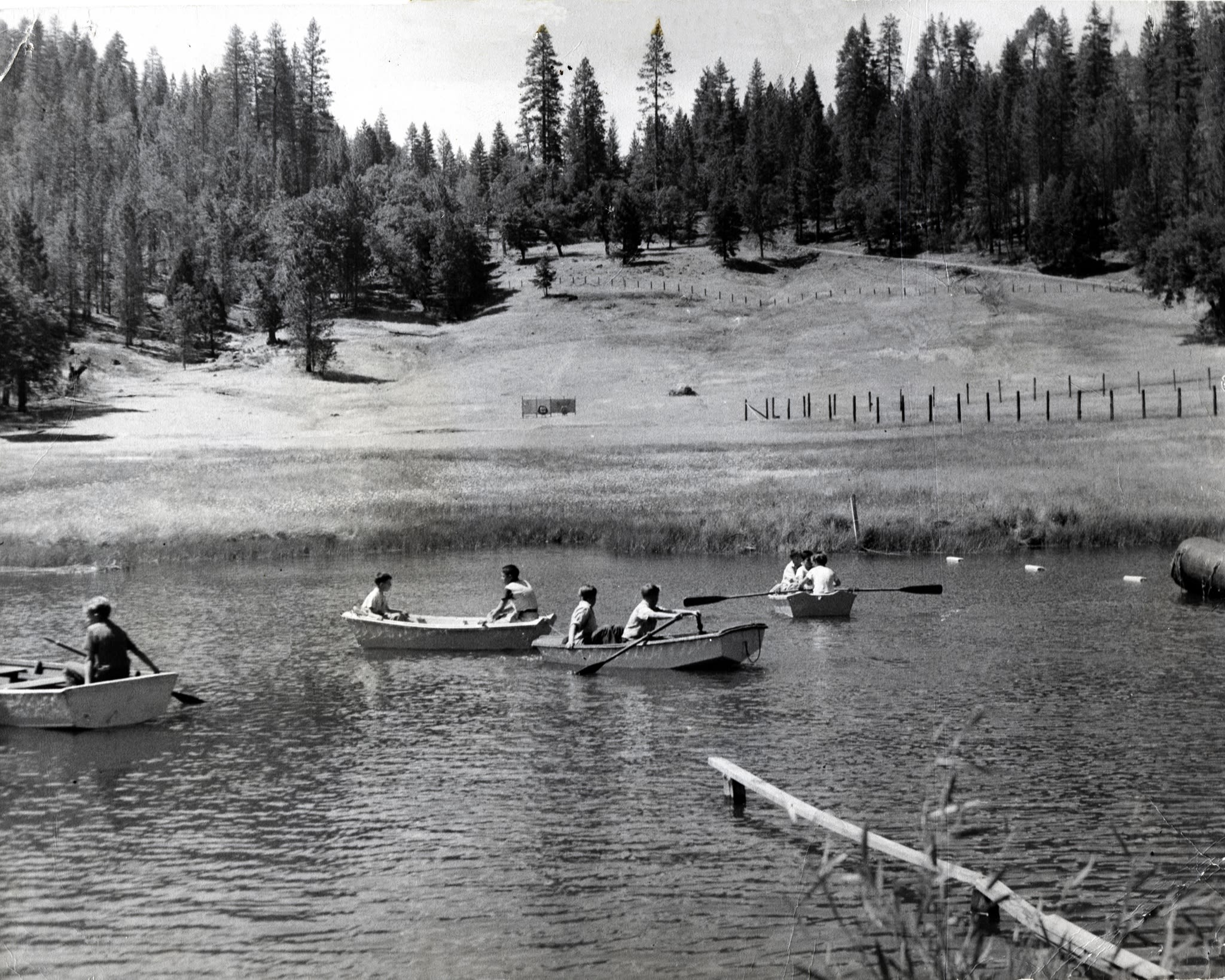
Campers rowing on the lake. Undated.
Marvin Bienstock Arrives
While Harry Altschule had guided camp through its fragile first two seasons, the arrival of a new director in 1967 marked a shift in tone.
In 1967, the UJCC appointed Marvin Bienstock as camp director. Bienstock, who had been leading the Marin Jewish Community Center, brought a distinct sensibility to Tawonga.
A guitarist himself, he introduced contemporary folk songs such as “Blowin’ in the Wind” and “Leaving on a Jet Plane” alongside traditional camp music, and he established rituals like the Shabbat Stroll that would become fixtures of camp life.
“Mr. B was a warm, caring, cuddly teddy bear. He was so full of love and happiness and he loved music.”

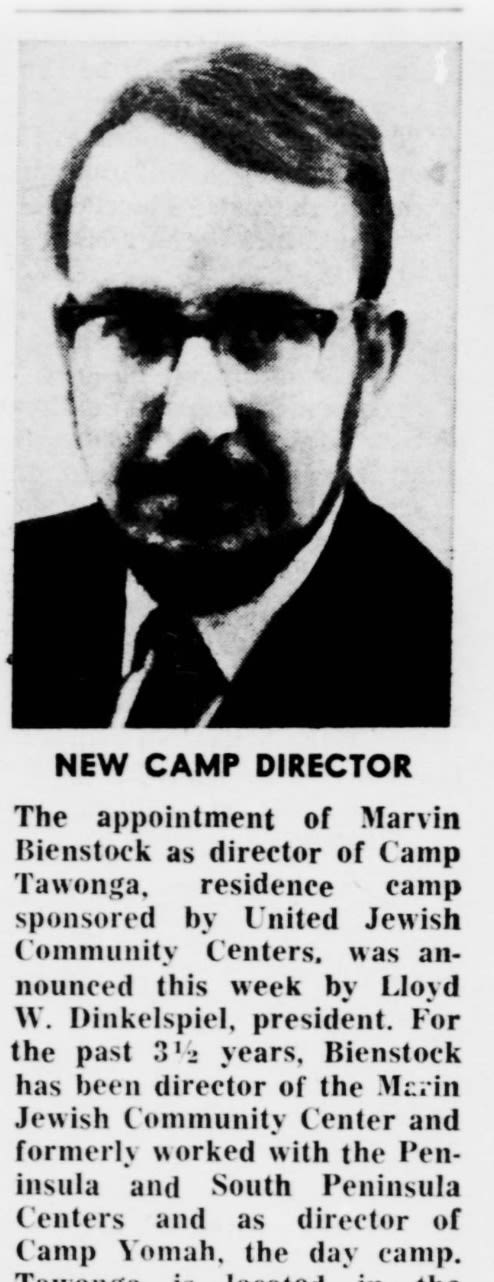
Bienstock ushered in the beginnings of the loving, intentional, and cooperative culture that defines Tawonga today.
"The sense of warmth and love, and the soul of the camp is still so much the same today as it was back then."
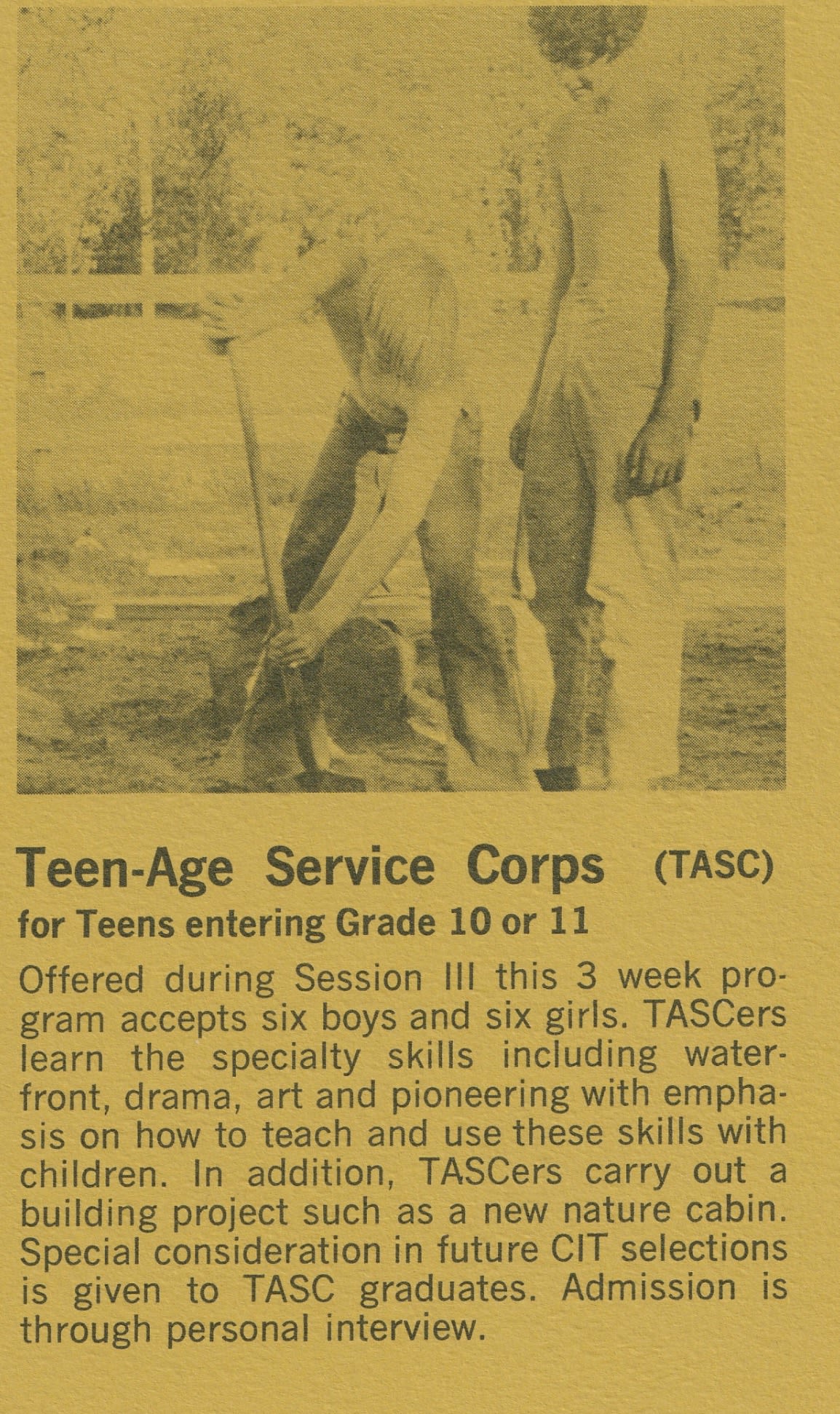
Bienstock was especially focused on building Tawonga's teen program. In 1969, he launched the Teen-Age Service Corps (TASC), a program that gave older campers the chance to work alongside activity specialists while also contributing to camp infrastructure.
But his most memorable effort to draw teens to Tawonga was far less conventional . . .

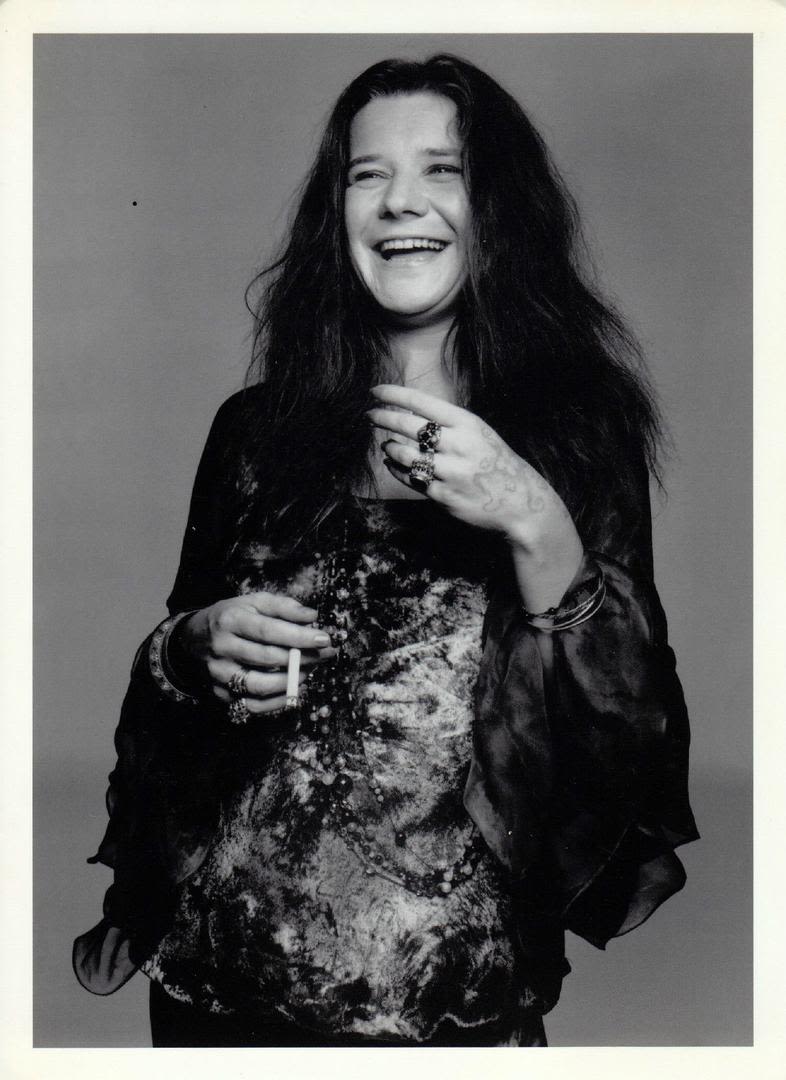
Janis Joplin at Camp Tawonga?!
In the summer of 1967, Camp Tawonga briefly intersected with the wider world of American popular music when Janis Joplin and her band, Big Brother and the Holding Company, spent time at camp during Session 4. Joplin’s appearance would go on to become one of the most frequently retold stories in Tawonga’s history.
Joplin and her band were guests of Camp Director Marvin Bienstock, who had met the band’s manager, Peter Albin, while working at the Peninsula Jewish Community Center. Bienstock later recalled that he hoped bringing a popular band to camp might help boost teenage attendance.

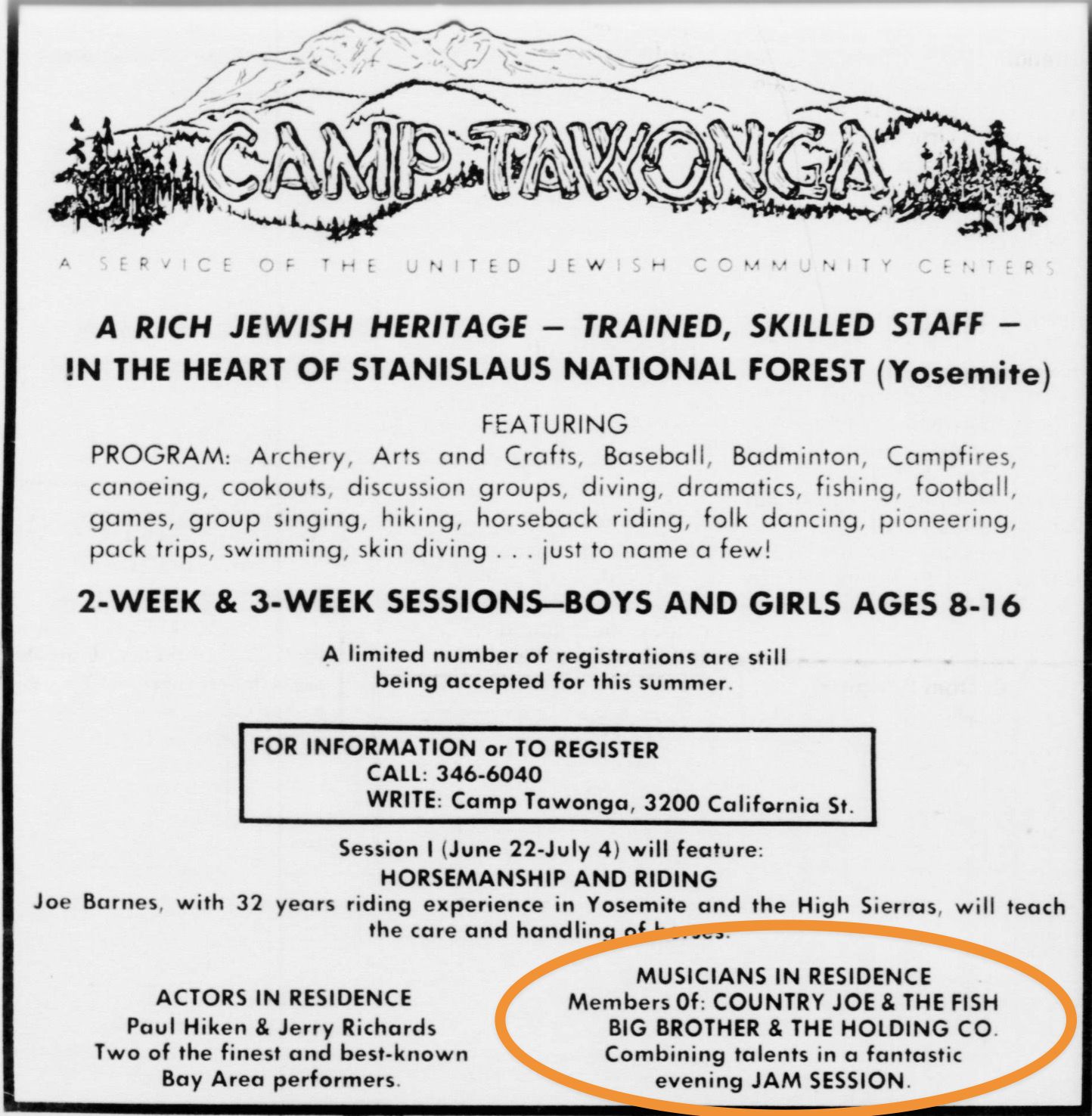
Tawonga ran an advertisement in the Jewish Community Bulletin, May 30, 1969, describing Big Brother and The Holding Company as “Musicians in Residence.” However, Joplin had left the band in 1968, so this was not the summer of her appearance at camp.
Tawonga ran an advertisement in the Jewish Community Bulletin, May 30, 1969, describing Big Brother and The Holding Company as “Musicians in Residence.” However, Joplin had left the band in 1968, so this was not the summer of her appearance at camp.
For campers, the experience was startling and unforgettable. Bienstock arranged for the band to play a main concert, which they did. Tawonga alumnus Mark Langton later recalled Joplin singing a powerful version of “Summertime” just a few feet away from him as he danced with his crush, Suzie Greenspan.
Bienstock also recalled that after the concert, Joplin and her bandmates went skinny-dipping in the camp pool. The moment has since taken on legendary status, though not without embellishment.
“There were only five people — one of whom wasn’t from camp at all — who went skinny-dipping with Janis Joplin, but there are hundreds who claim to have been there.”


This memory was submitted by Dan Edelstein for the 60th anniversary celebration in 1985.
This memory was submitted by Dan Edelstein for the 60th anniversary celebration in 1985.




But the most revealing story from Bienstock’s years may be a quieter one.

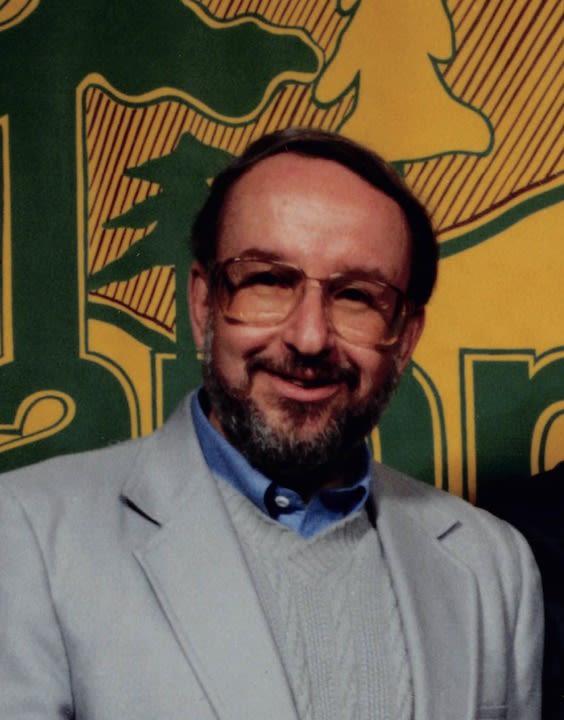
Marvin Bienstock, pictured at Camp Tawonga’s 60th anniversary celebration in 1985
Marvin Bienstock, pictured at Camp Tawonga’s 60th anniversary celebration in 1985
As Bienstock later recalled, campers routinely resisted participating in Shabbat services. One Friday, the staff decided not to fight it. There would be no Shabbat. No gathering on the lawn to sing. No grape juice, no challah, no blessings. Cabins went to dinner as usual and were told the evening was theirs.
Nobody left. Instead, the campers protested. “You can’t do that! This is Friday!” they shouted. Within an hour, they had organized and led the service themselves.
“You never know how important something is to you until you lose it,” one camper said afterward.
Bienstock left Tawonga after the summer of 1970. But the camp he handed off was no longer the provisional operation that had reopened five years earlier. It had begun to develop a distinct personality — improvisational, musical, rooted in Jewish life.

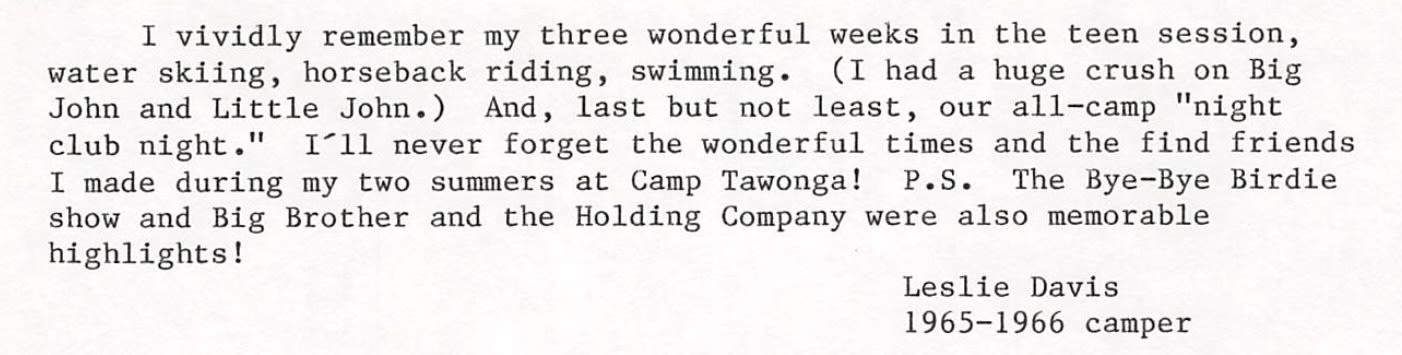
Memory from Leslie Davis, submitted for Tawonga’s 60th anniversary celebration in 1985
Memory from Leslie Davis, submitted for Tawonga’s 60th anniversary celebration in 1985


In the next chapter, we’ll follow Tawonga into the 1970s, a decade that saw new leadership, a formal statement of purpose, a more deliberate embrace of Jewish life . . .
. . . and “Country Roads”!
The Story Continues . . .
We hope you’ve enjoyed this third chapter of Almost Heaven: A Visual History of Tawonga at 100

Available Now!

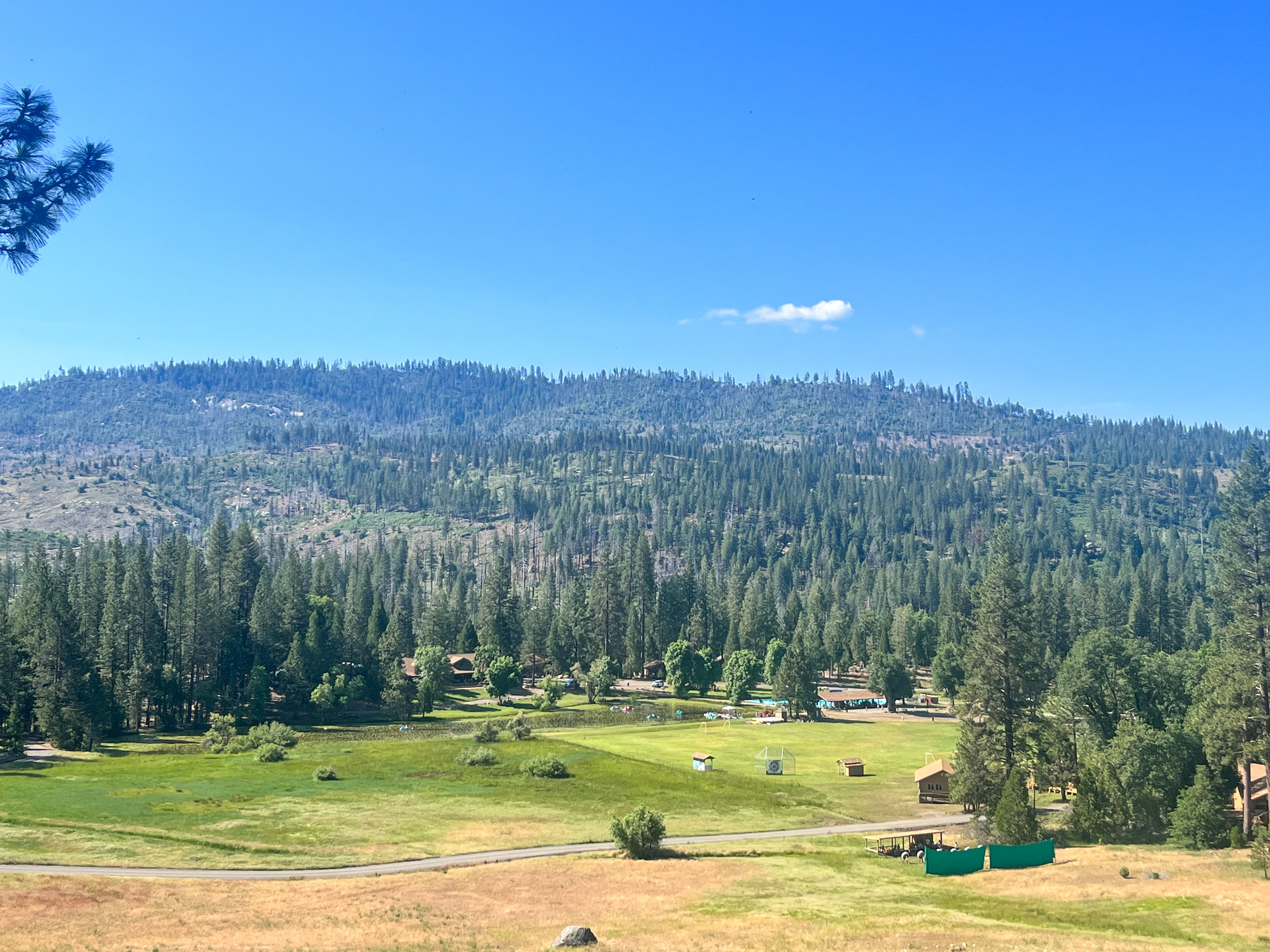
Learn more about the history of our 160-acre parcel in the Stanislaus National Forest.
Chapter 4: Tawonga in the 1970s
Coming in April 2026!

Tawonga in the 1970s. Groovy!


 Built with Shorthand