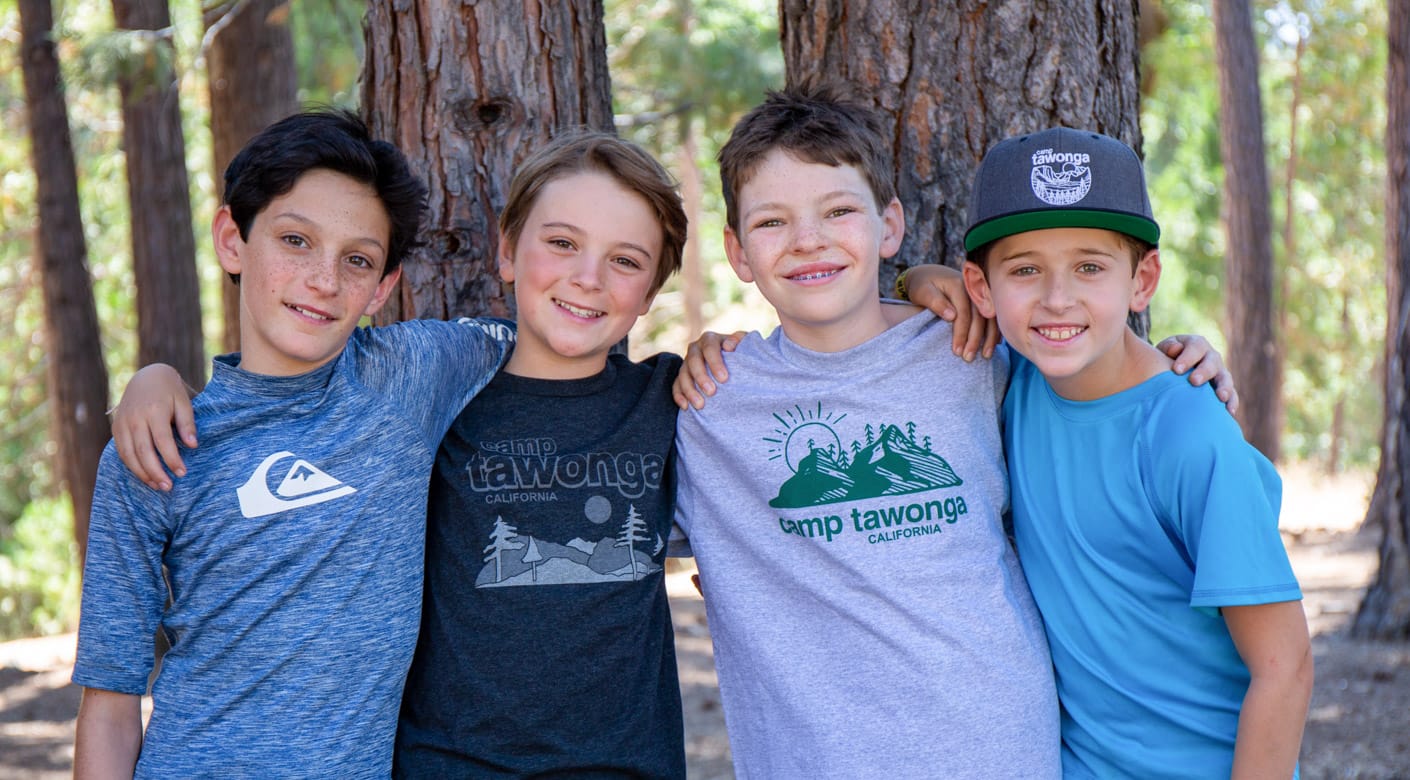
Cabin life is central to the camper experience. Rooted in a group-centered philosophy, children spend the majority of their day with their bunkmates and two counselors. Campers develop deep and meaningful bonds with their bunkmates, enjoying the fun of an extended slumber party in a supportive and cooperative community.
Cabins and Bathrooms
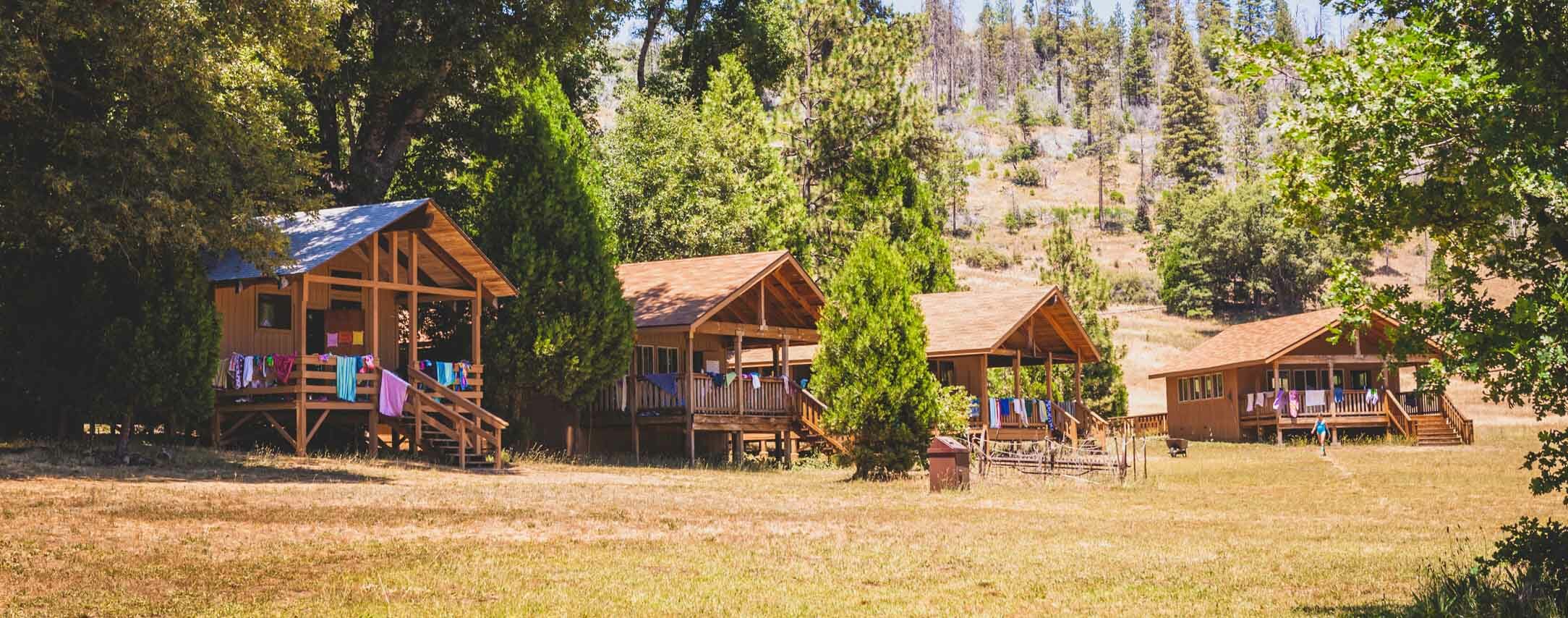
Our camper cabins hit the perfect balance of “comfortably rustic” for a child’s summer camp experience in the mountains. Each cabin has one large room with bunk beds, small cubbies, a curtained changing area, and a shaded porch for communal lounging. Campers can choose to change in the bathroom, behind the curtain, in their sleeping bags, or in the open area of the bunk, depending on how much privacy they desire. Cabins are situated on both the Ridge and River sides of Camp.
Nearby communal bathhouses have electricity, toilets, showers, and changing areas. The bathhouses have assigned areas based on gender and campers and staff use the bathhouse based on their gender identity. Each bathhouse also includes numerous private all-gender bathrooms (each with a toilet, sink, and shower).


Counselors and Staff
Two to three counselors live in each cabin, building close relationships with campers and supporting them throughout the day and evening. Nearly 200 counselors, supervisors, specialists, and support staff work together to create the camp experience, ensuring strong supervision and attentive care. Our counselors are warm, supportive adults who truly love working with children — and more than half were campers themselves.
Working at Tawonga is highly competitive;we hire only the most qualified, enthusiastic applicants. Every counselor is at least 18, has prior experience working with children, passes three reference checks and a background check, and is up to date on childhood vaccinations.
Before campers arrive, counselors complete a week-long staff training, with additional training for supervisors and wilderness staff. Tawonga is recognized as a leader in Jewish camping and has developed innovative trainings adopted by camps across the country. Staff learn how to build strong communities, support campers who miss home, navigate challenging group dynamics, and care for campers with a wide range of needs.


Cooperation
On the night campers arrive, they participate in a bunk discussion to develop their bunk’s “Ten Commandments,” which are the rules by which campers agree to live and the respectful and kind ways they will treat one another. This lays the groundwork for creating a positive and cooperative bunk community.


Bunk Assignments
Cabin Groupings
Tawonga offers boys’, girls’, and all-gender cabin options. Our year-round staff thoughtfully assign campers to bunks with no more than a two-grade spread (e.g., 4th and 5th, or 5th and 6th – rarely three grades together). Since we don’t cap enrollment by age, similarly aged campers often fill multiple bunks, sometimes spanning more than one unit (4-5 bunks). Our goal is a mix of new and returning campers, established and new friendships, and a good balance of ages in each bunk — there’s no “right” unit for any age group, and bunkmates can change from year to year. Our goal is to ensure that every child who attends Camp is welcomed, included and celebrated.
Bunking Requests
Campers can request up to three bunkmates, and we do our best to grant at least one — especially mutual requests. We balance many factors, so we can’t always accommodate every request (we’ll let you know if none can be granted), and we’re unable to take specific bunk or unit requests. If you don’t submit a request, we’ll assume your child is open to any bunkmate in their age range. Questions? Call 415.543.2267 or email [email protected].
Negative Bunkmate Requests
We give every camper a clean slate at Camp, assuming positive intent rather than carrying over issues from home. If there’s a serious concern about another camper (e.g., documented bullying or harassment), please email Shoshie Flagg at [email protected]. We can’t guarantee separate bunks, but we’ll let you know either way and make sure staff are aware beforehand. Please note that a negative request takes priority over your other requests — granting it may mean your child doesn’t get their other bunkmate requests.
Enrolled families: Submit all forms by the CampInTouch due date. Bunk assignments are typically finalized 3-4 weeks before each session — requests received after that can’t be guaranteed.